

How do geese fare in colder climates? Do they need a barn for the winter? Geese are some of the hardiest fowl you can raise on a homestead. This article explains what they need to thrive through even the coldest winter months, and dispels some misconceptions about winter goose care.
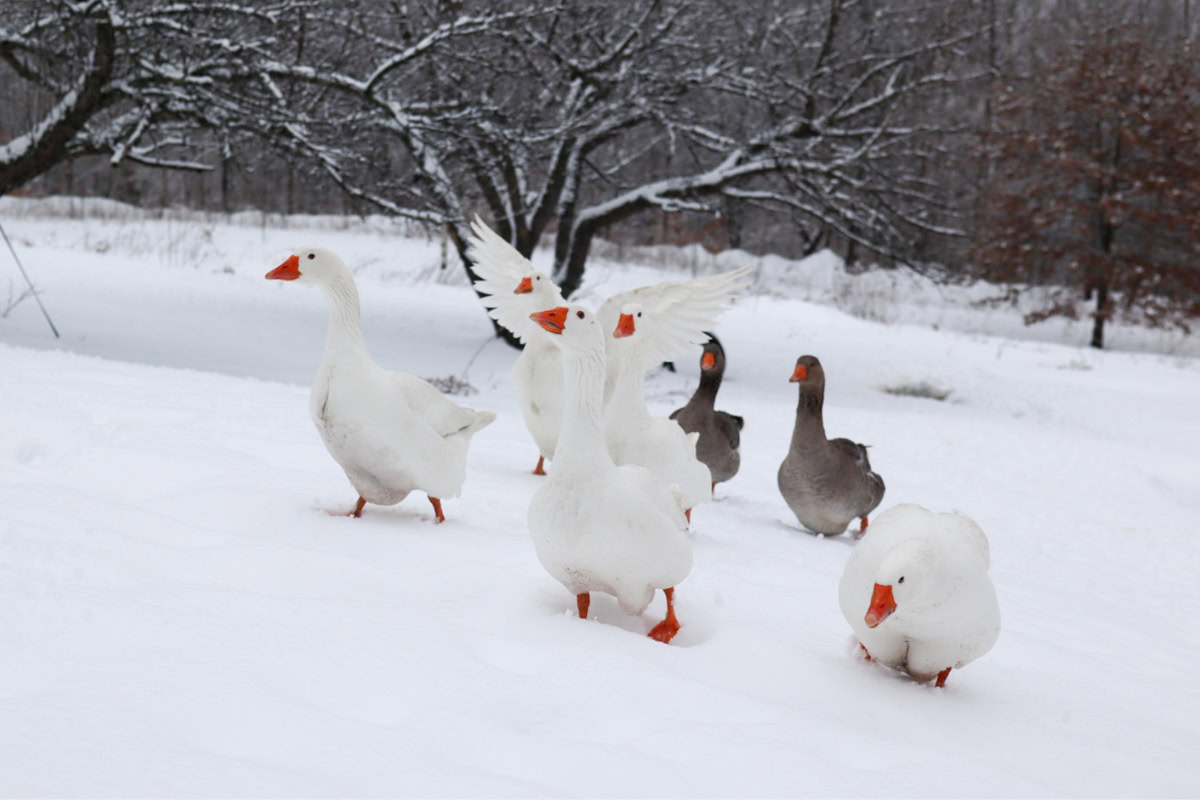
Geese Can Thrive in Cold Climates
When I share photos of my geese playing in the snow, there are always folks who wonder how it's possible to keep geese healthy in the winter, when ponds and lakes are frozen over here in Maine. "Don't geese fly south for the winter?"
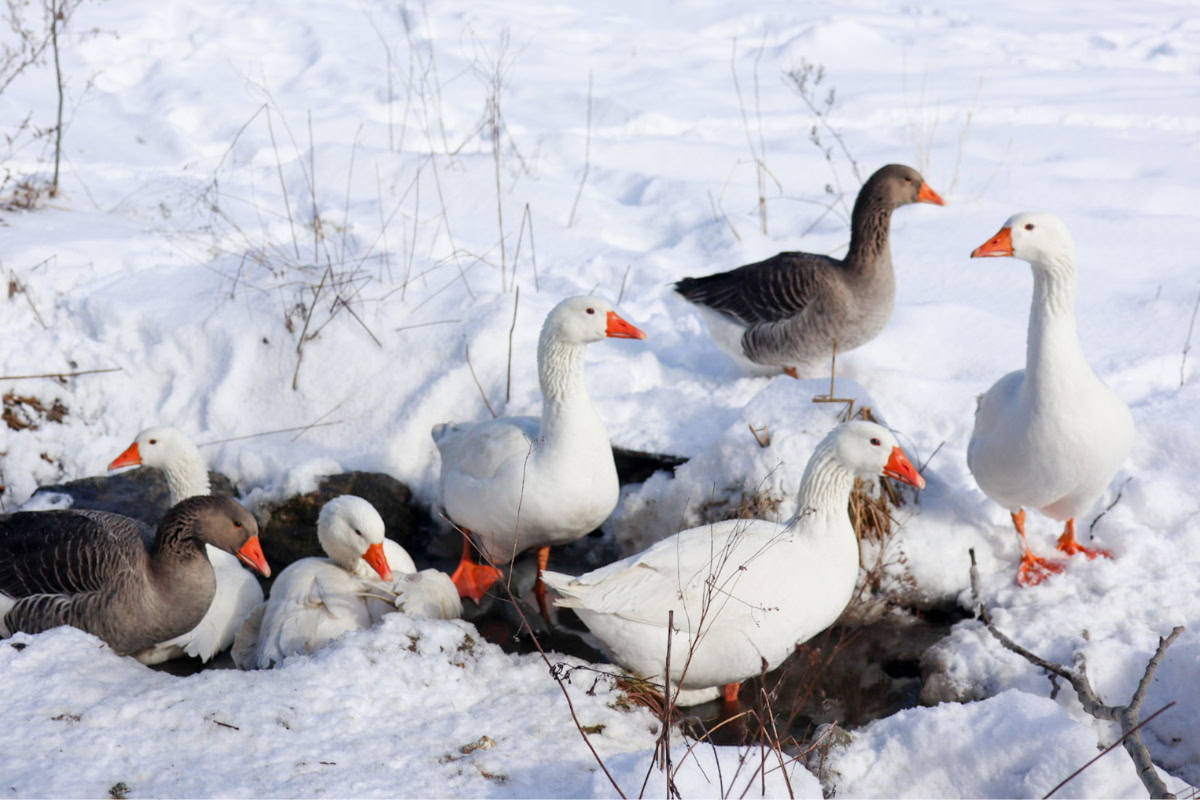
The truth is that geese are some of the hardiest domestic fowl you can raise. Their requirements for warmth and shelter are minimal, and left to their own devices, many flocks of domestic geese will choose to sleep outside in all but the most frigid weather.
Geese are less prone to frostbite than chickens. While toes and combs can be susceptible to real damage from frostbite in sub-zero weather within the chicken flock, geese kept on the same property, and even housed in the same structure, are almost certain to remain unscathed.
Winter Shelter Requirements for Geese
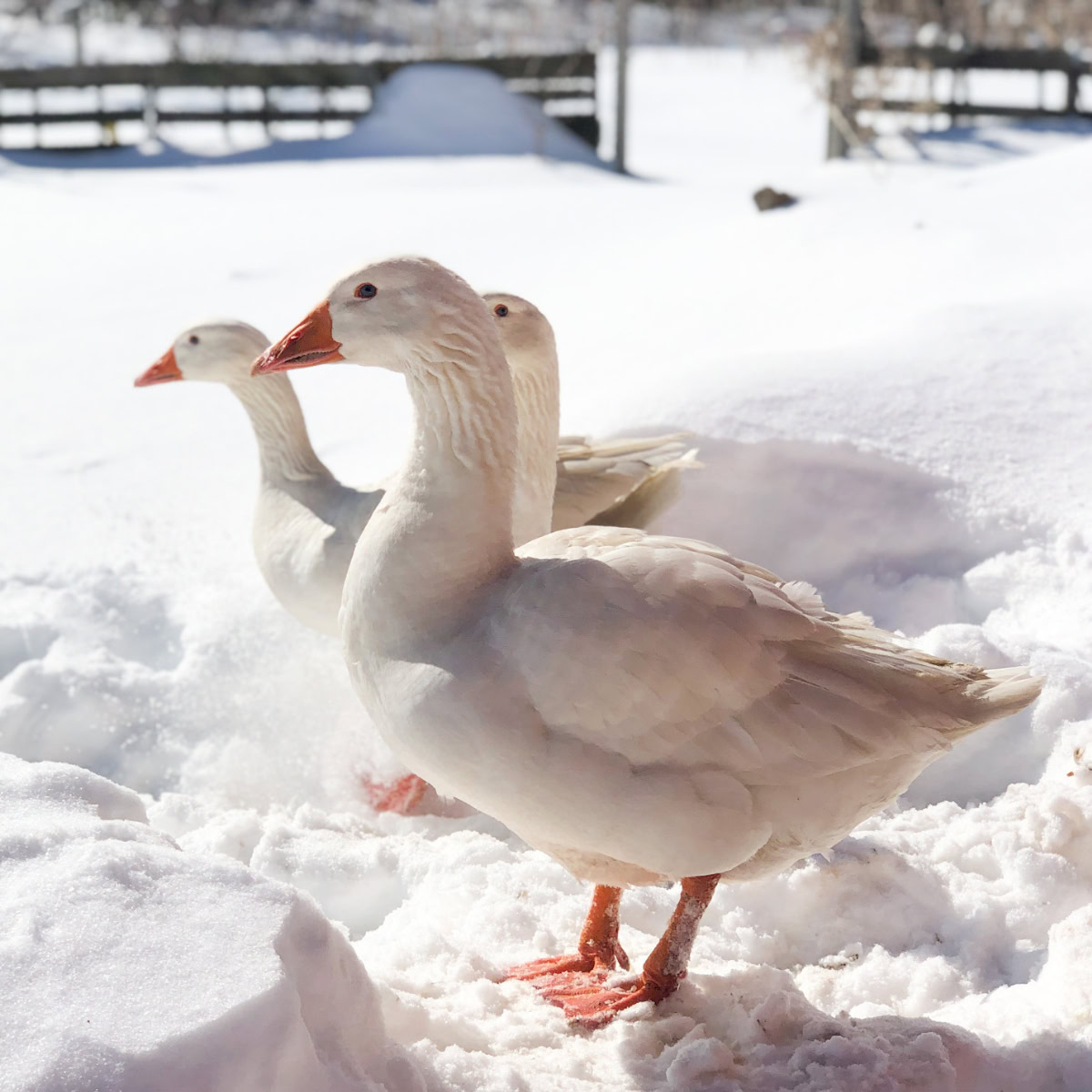
While geese are naturally extremely hardy, this doesn't mean you can skip the shelter altogether. It is important that geese have a place to get up off the snow, and out of the wind. Even if they only choose to use a shelter in the coldest weather, having a place like this is a necessity if you're planning to keep geese in a colder climate.
While a barn with a closing door is great, even just a good sturdy shelter with an open door that faces away from the wind, can be adequate. Make sure there's bedding several inches deep for them to settle down into. If your shelter does have an open door, it's a good idea to make this bedding even deeper--a foot deep really isn't too much, so that they can stay well up off the frozen ground.
The door to the shelter shouldn't be too low, since most geese resist going into an enclosed space where they need to duck their heads to enter.
Even with the option of a good shelter, you may likely find that your geese choose to spend the milder winter nights outdoors, including when there's snow on the ground. Geese are famously good at knowing when to seek shelter, and when they'll be fine without it.
Geese Do Not Need Supplemental Heat
Some older poultry-keeping manuals, especially from the 70s and 80s when there was a sudden surge of publishing to meet the market created by the "back-to-the-land" movement, contain advice that contradicts this.
One such manual that I'm holding right now (published in 1981), suggests adding heat to the shelter, and requiring geese to stay in there so they never experience temperatures below 32 degrees F. This is bad advice.
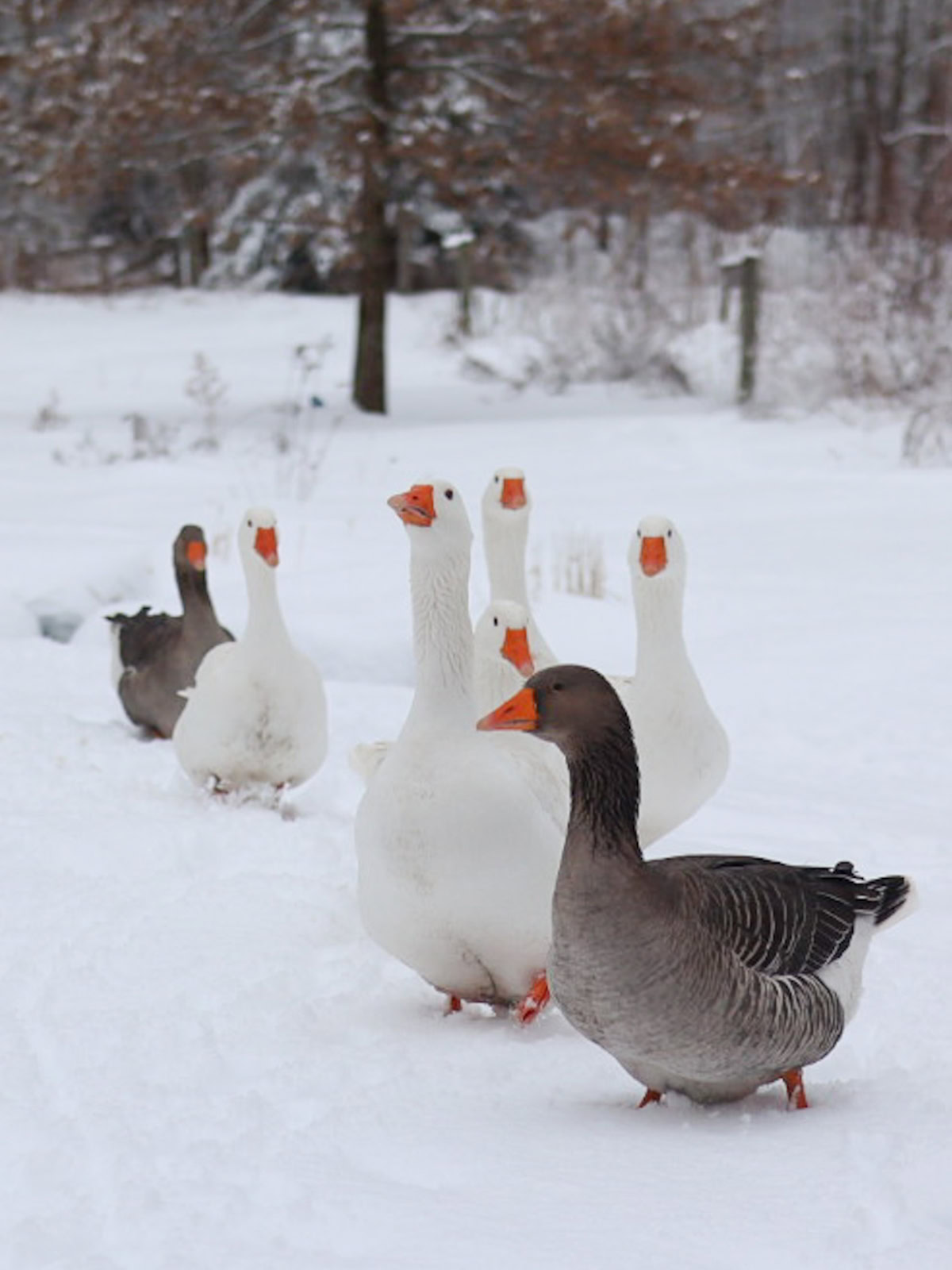
Interestingly, British guides of the era, and American farmers' manuals from earlier eras, including the 1800s, offer much more accurate assessments of what geese need to thrive during cold winters. Supplemental heat is neither needed, nor beneficial, for geese in the wintertime.
Geese Need Fresh Water That's Appropriately Deep
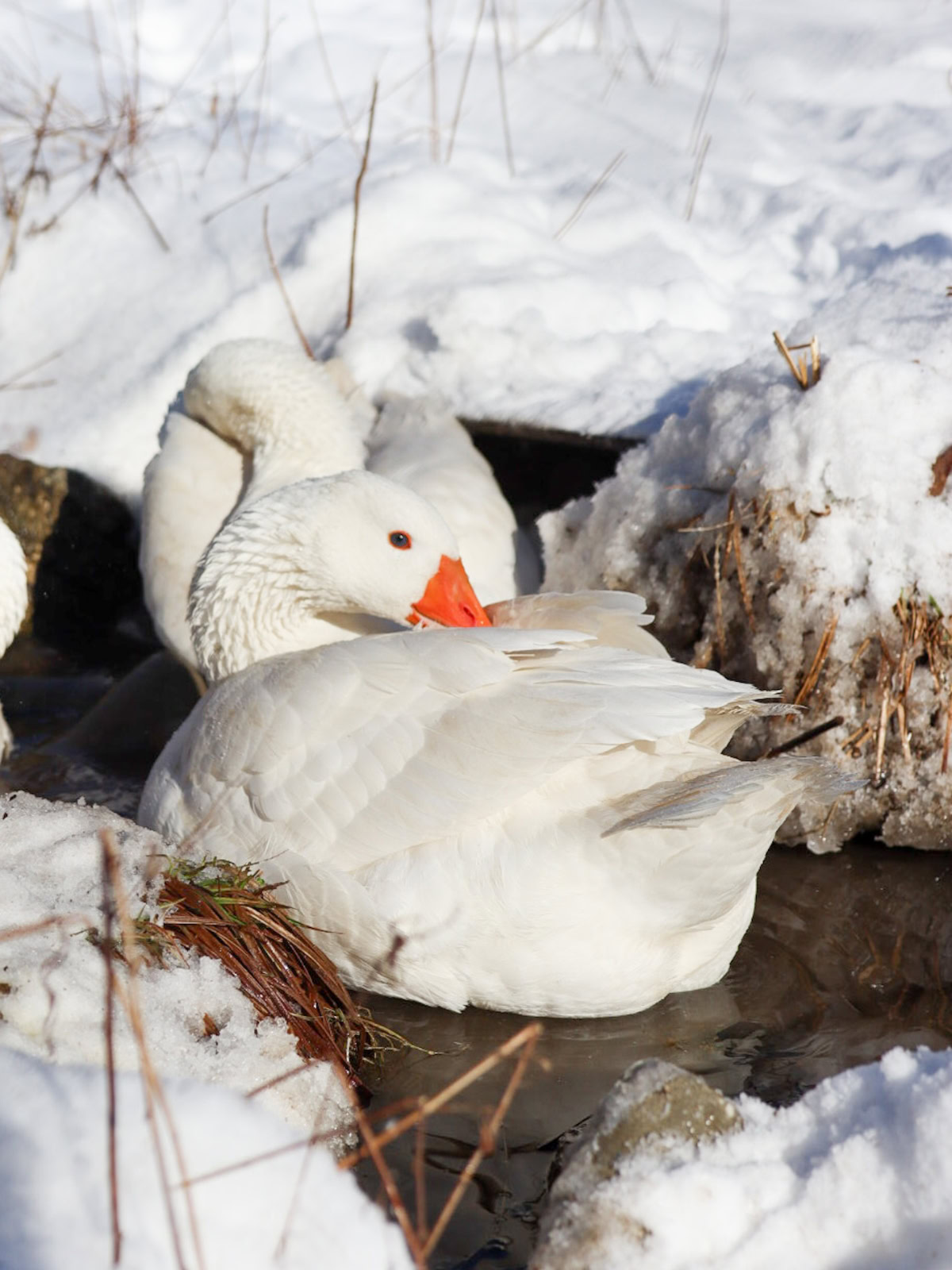
While geese do love a good pond, and will cram themselves into any available water receptacle during the winter months, they don't actually need a water source large enough to swim in.
What they do need, is a constant source of water during daytime hours, that's deep enough for them to fully submerge their bills, including their nostrils. Even a deep dog dish can be adequate, if kept full.
A more common setup is to use rubber stock tubs. The benefit of these is that even if they do freeze, you can tip them upside down, stamp on them to dislodge the ice, and then re-fill them. Geese don't need water during the nighttime hours, but if you're removing water at night, make sure you're removing the food as well. They should always have access to water, any time they have access to food.
Many people choose to dump the day's water tub when doing evening chores, bringing it inside for any bits of ice to thaw. The next morning, the tub is replaced and filled, when doing the morning chores. This is a setup that I find works well. In the coldest weather, when water freezes in just a few hours, you may find that a couple of extra trips to tend to their water throughout the day, are necessary. You might top up the tub with warm water, or just dump out the ice and refill the tub.
Housing Geese With Chickens In The Winter
While you absolutely can have geese and chickens share the same shelter, most goose keepers will find that this arrangement becomes testy as the days lengthen and breeding instincts kick in. It's amazing how quickly a peaceful barn can become noisy and even violent, when geese decide it's time to build a nest.
I go into this in depth in my article about housing geese with chickens, and it's worth a read if you're considering this solution. If you do choose to house your geese in the chicken coop, be prepared for the likely need to make some housing adjustments for the chickens' safety, as January draws to an end. February is often when breeding behavior really starts kicking into gear, in the goose flock.
Feeding Geese In the Winter
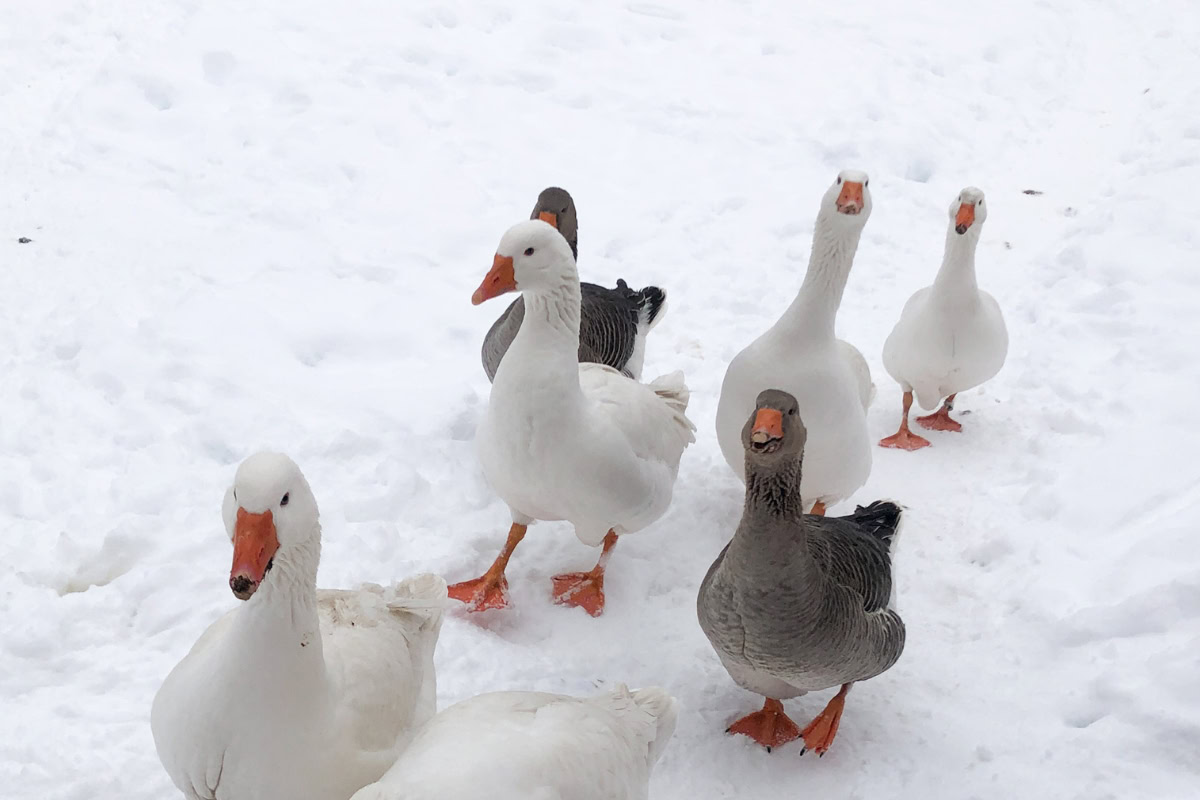
Like all domestic fowl, geese require more calories to keep warm during the coldest months. Even geese who won't touch pelleted feed during the summer, opting to only dine on grass, will of course need a good ration of well-balanced poultry feed in the winter months.
Most "All Flock" feed is higher in protein than geese require, even in winter. A 16% maintenance feed, supplemented with good-quality hay, is a good choice for geese during the months when grass isn't available. A few handfuls of corn or scratch in extra-cold weather can be a welcome treat.
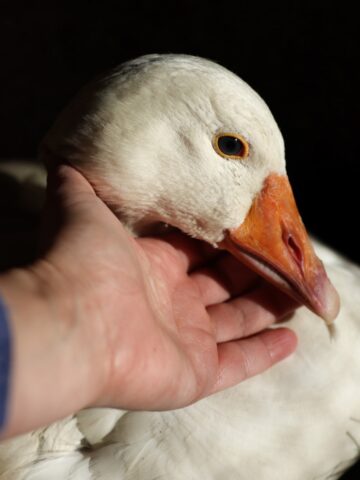
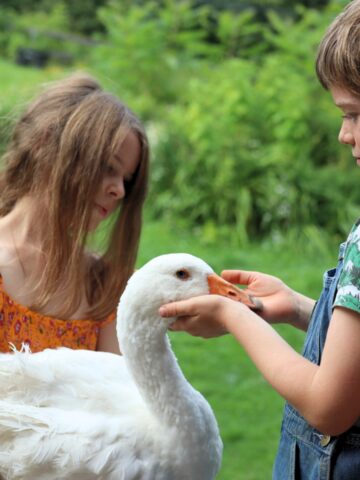
If you really want to see their little eyes light up, bring them some fresh greens, like a head of romaine lettuce, a bunch of kale, or a tray of sprouts that you've started for them. An apple is a treat most geese love, and letting them eat it from your hand can be a nice way to keep a friendly connection with them.
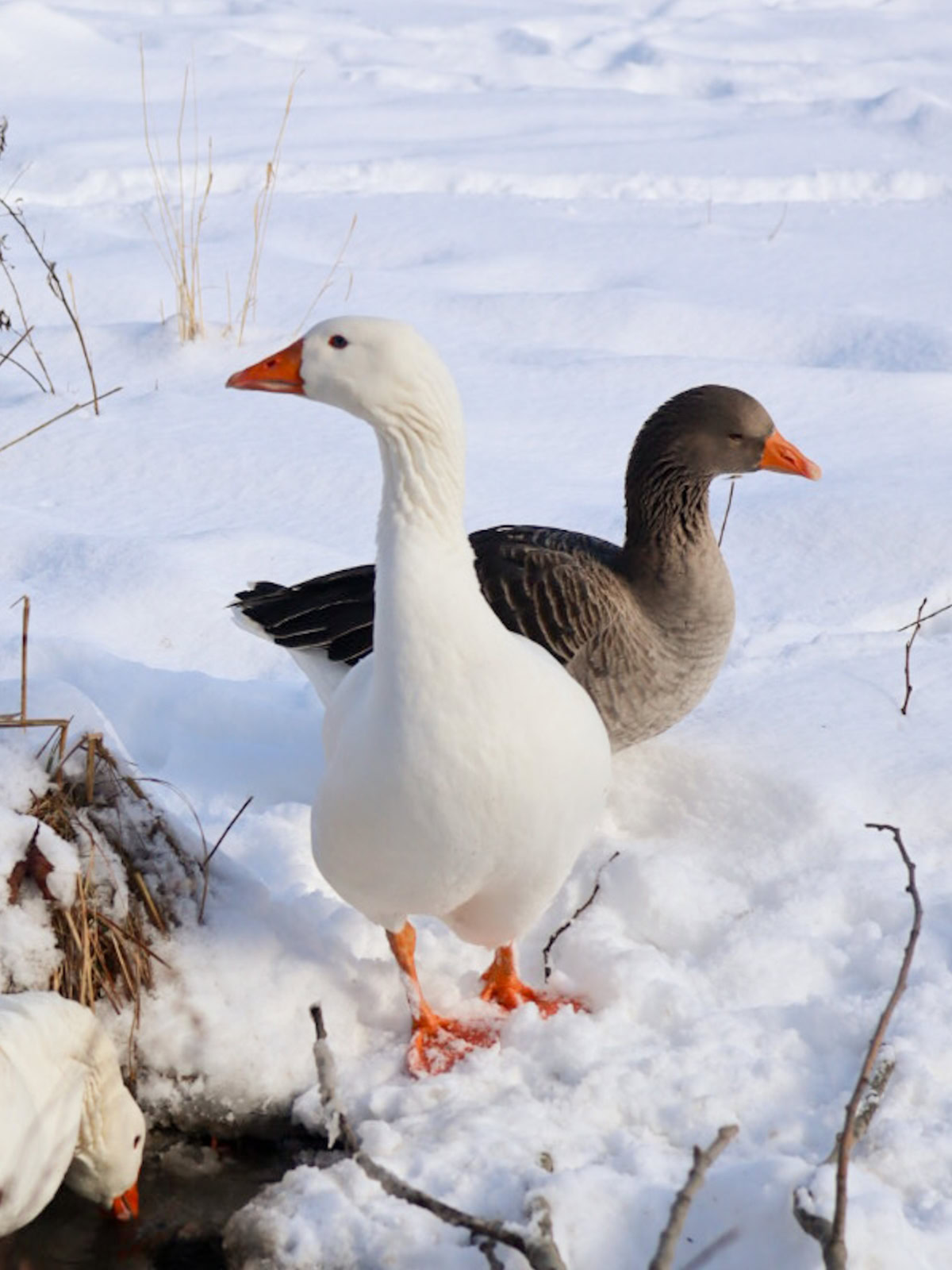
Keeping geese can be so rewarding. While many choose to raise them only until fall, processing them for the table, and starting again the next spring, keeping geese year-round allows for a self-perpetuating flock with geese that lay eggs and rear their own young. I hope this article has helped answer any question you might have about keeping geese through the winter. If you have questions I didn't answer here, please leave them in the comments below!
Some other articles you might enjoy:
- How Long Do Ducklings Take To Hatch?
- 10 Great Ways to Use Extra Eggs
- Garden-Ready Chicken Manure Compost in 18 Days
- How to Care For a Broody Goose
- Is It Safe to House Geese With Chickens?
- Hatching Turkey Eggs
- Raising Extra Drakes for Meat
- Printable Egg Incubation Chart For Hatching With Kids
- Homesteading Tasks I Do in March
- How To Hatch Goose Eggs
- How Long Does it Take For Duck Eggs to Hatch?
- How To Hatch Turkey Eggs In a Home Incubator



Anna Chesley
Anna Chesley is a freelance writer living a homestead lifestyle, with a special love for family travel, old books, vintage skills, and seaside living. In addition to founding Salt In My Coffee, she runs the website, New England Family Life, as well as The 1800's Housewife, a website devoted to re-creating authentic 1800's recipes.
Kristi says
Hi there. A lone wild white Chinese gander has made his way to our yard somehow. We have a large area with a pond and he seems to have made our place his home. He has been here 4-5 months. This is brand new to me and I love this goose :). His name is Gus (short for Augustus. lol) I give him pellet food- on the water and on land. He will also eat from my hand.
My question is, for the “treats” you mentioned above- head of romaine lettuce, apple etc- how do you give this to the goose? Chopped up?
Thank you.
Kristi
Anna Chesley says
Hi Kristi! Aw, Gus sounds like such a sweet boy! If he's eating out of your hand, you can actually just hold the lettuce for him so he can tear off bites. Same thing with half an apple, or almost any other treat. You can always pre-chop it, but especially if he's a solo boy right now, the social aspect of taking some time and being part of the snack by holding it for him is probably a welcome part of his day!