

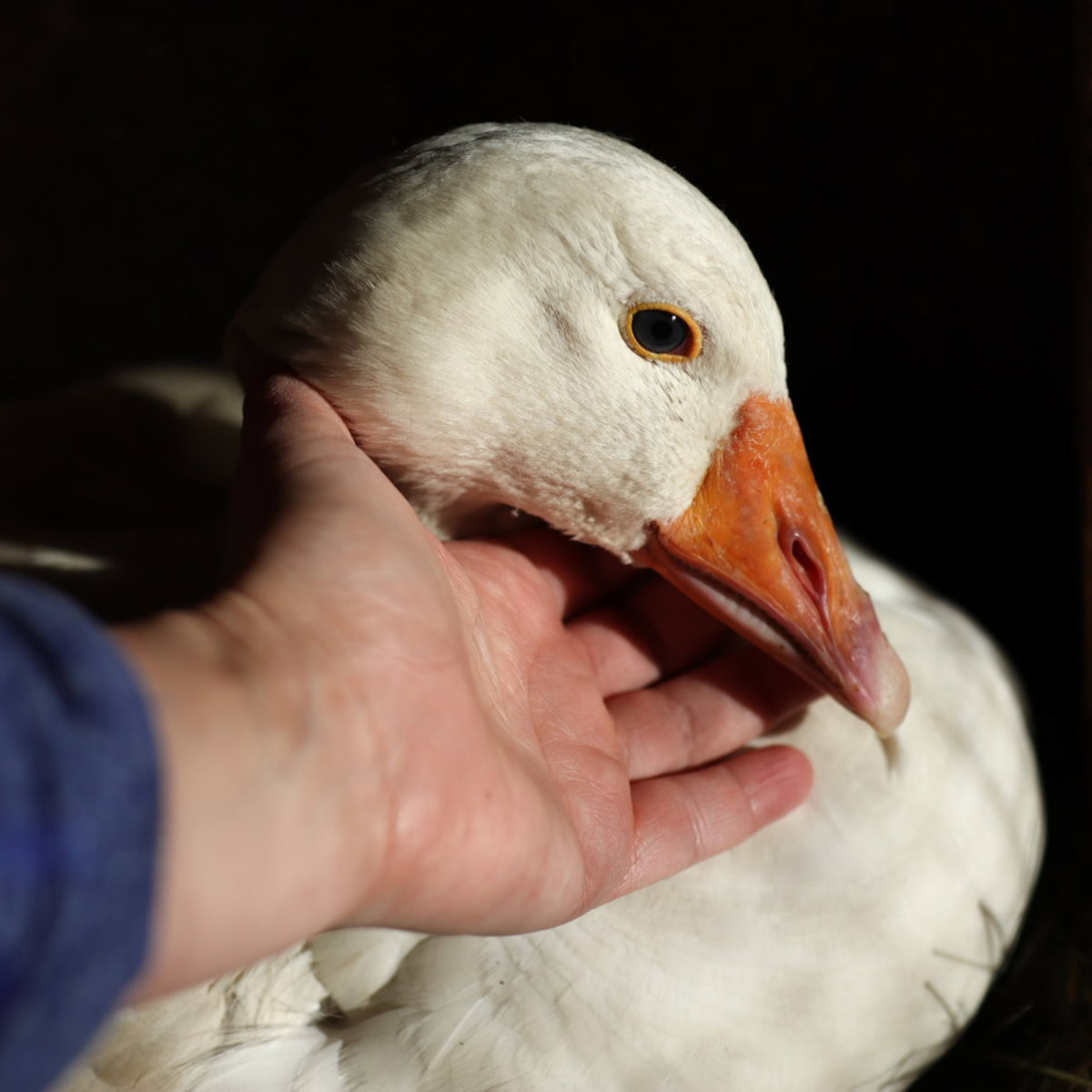
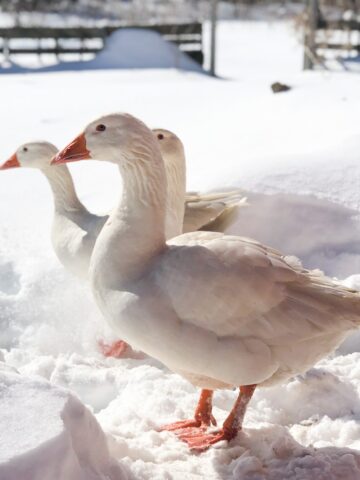
There may be no sight more pastoral and sweet, than a proud mama goose with a bunch of precious little goslings following her around. For those who come too close, it can also be a little intimidating...don't mess with mama!
If you have a broody goose, letting her hatch and raise a new generation of geese can be a great experience, and a real money saver as well.
From my own experience, here are a few practical care tips I've learned, that can help set you and your mother goose up for a good experience, resulting in healthy, robust goslings.
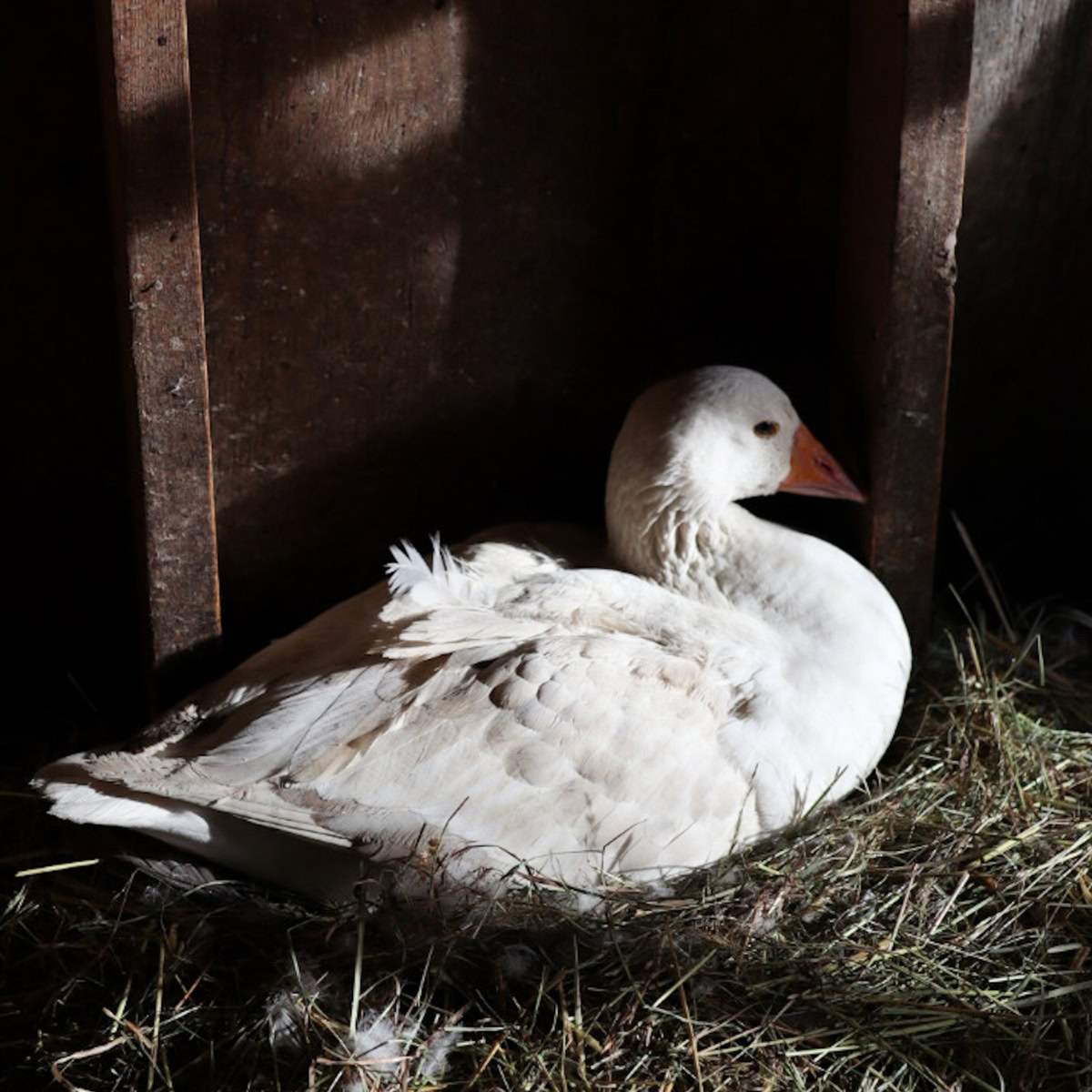
First things first. Make sure she's safe from predators.
I've heard so many stories (especially this spring!) from goose keepers who allowed a goose to sit on a nest in an unsecured location, only to discover with heartbreak one morning, that a predator had ravaged the nest overnight.
Geese can be fierce, so it's easy to think no predator would dare come near that mama goose. After all, she's a feathery fiend who could practically take your finger off for coming close enough to offer her a treat, if she's feeling protective of her nest.
Losing geese to predators happens more often than we'd like to think though. Coaxing mama goose to settle for a safer nesting spot, inside a barn or a coop that gets secured at night, is the best way to help prevent heartbreak.
If you find that your goose seems determined to lay her eggs outside the barn, one way to help her settle for an indoor nesting spot is to keep her cooped up in the barn for a few days. Offer lots of good bedding and a few different nesting box options (my girls are convinced that ONLY an old grubby tire will do.), then keep her from going outside when you let the rest of the birds out for the day.
I don't usually recommend keeping waterers in the barn, to prevent excess mess and humidity, but times like this are an exception. When you're setting mama up for nesting, go ahead and give her water and food near the area where you'd like her to nest. She may "hold it" and not lay an egg for a couple of days, but pretty soon she'll come around and make the best of it, choosing a spot to lay her eggs indoors. Usually this is enough to get her nesting in a good location, where she's safer than outdoors. If she feels most comfortable having her mate with her, consider penning them both in together. Ganders vary in personality, but often when their mate is settling down to nest, they're happy to keep her company, even if that means being off of grass for a while.
Provide plenty of clean, dry bedding
Geese are fussy, fussy, fussy about their nests. Having abundant nesting material available is a good way to encourage your girls to go broody, and built a nest. Try offering an assortment of hay, straw, and even some light brush from the yard.
Continue collecting eggs until she's ready to sit
Generally, geese will lay eggs for a few weeks before buckling down and deciding to sit. A good clue that your goose is about to go broody and start staying on her nest, is the appearance of feathers in the nest. While she's just laying eggs, but not yet ready to sit, she'll generally lay her eggs in the nest, fastidiously covering them with hay or straw before leaving for the day. I continue gathering eggs daily during this time, and don't start letting her collect eggs until I see that she's truly ready to sit.
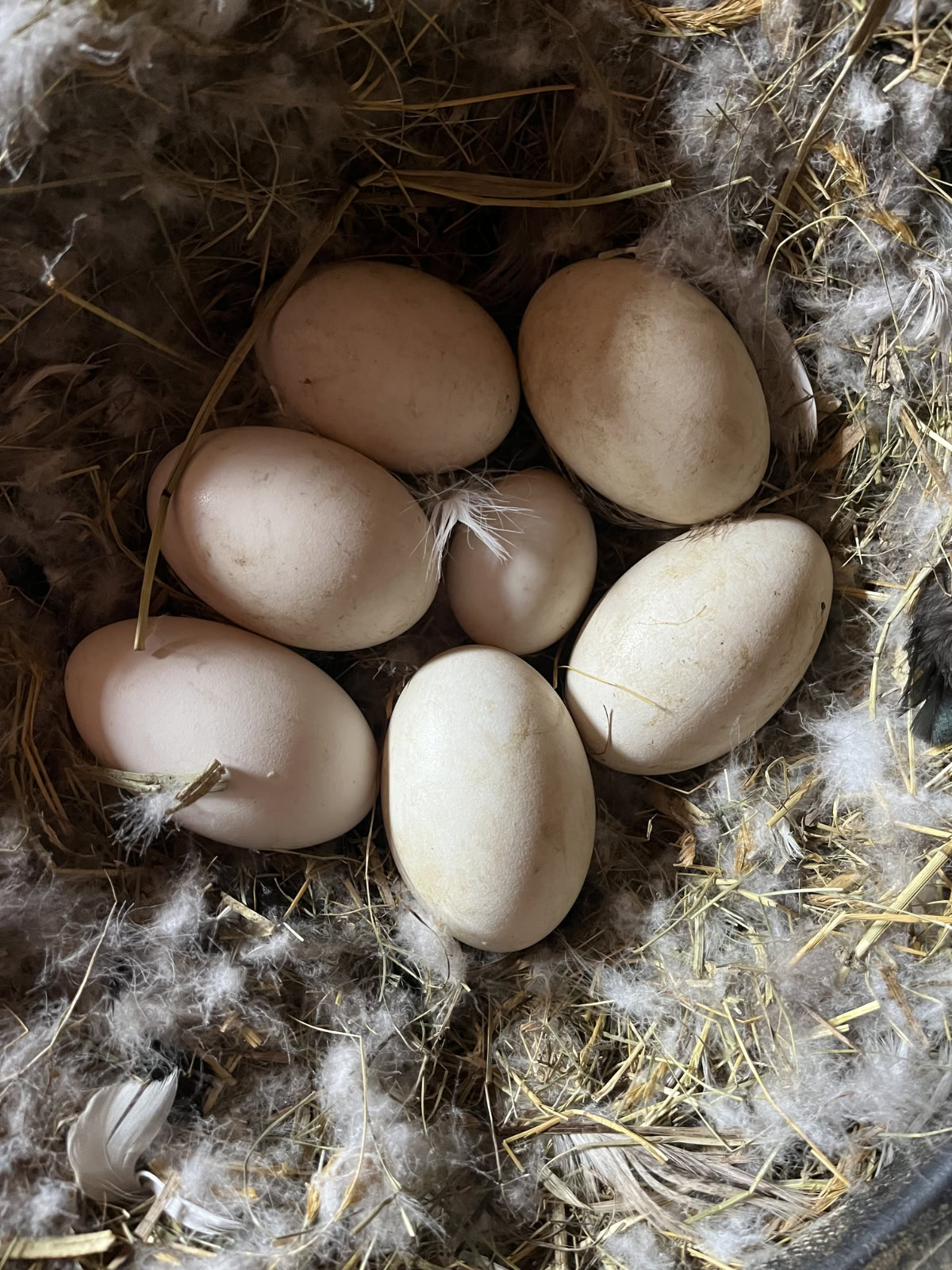
When she's getting ready to go broody, you'll all of a sudden start seeing soft little feathers throughout her nesting material. This is when I stop collecting eggs, start marking them, and allow her to build up a nice clutch of eggs. Generally when there are somewhere between 5-7 eggs gathered, she'll stop leaving the nest during the day, and will stay put.
Provide food and water nearby
You don't need to have food and water right next to the nest (and actually it's best not to, to reduce traffic from the other birds), but do keep water and food close enough that she can stay within sight of the nest to get to it.
Geese can leave their nests for prolonged periods of time, even while successfully brooding out a nest of eggs. If the weather is cold, or she's a first time mom, your goose may leave the nest each day just barely long enough to eat, drink, and poop. (There is no barnyard poo like the pile created by a broody goose when she takes her daily break, let me tell you!)
If the weather's warmer, and sometimes if a goose has the confidence that comes with years of raising babies, she may leave the nest longer. These girls have incredible instincts, and it's generally a good plan to just trust them. If you see your girl enjoying a leisurely swim on the pond, while she's "supposed" to be sitting on eggs, chances are those eggs are just fine, and she knows it.
Keep track of her eggs
Sometimes a goose will continue laying eggs for quite a few days, even after she's begun to sit on her nest round the clock. Also, if you have other girls in your goose flock, they may crowd in with her, or take a turn on the nest, leaving behind additional eggs.
Once a goose has truly begun to sit, I like to make sure that each egg is clearly marked. Any new eggs that show up after she's been sitting for a day or two, gets removed daily, so that they don't begin to develop.
Outcomes are generally best when all babies hatch within about 48 hours of each other. With a prolonged hatch, where some eggs hatch while others aren't ready yet, one of two unfortunate scenarios generally occurs.
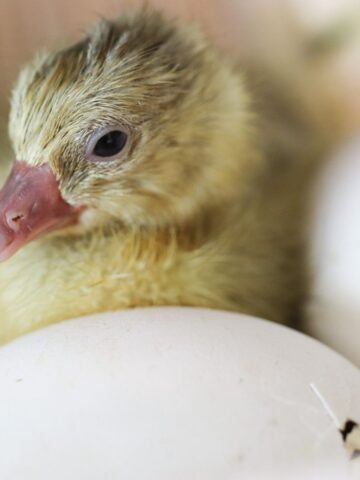
Perhaps the most common scenario is that mama goose gives up on the eggs that haven't hatched, once her first babies are a couple of days old. This leaves unhatched goslings that are nearly fully developed in the remaining eggs, so that they grow cold and die in the shell.
The other scenario is that she stays so devoted to the unhatched eggs still in the nest, that she doesn't leave the nest to care for goslings that simply must follow their biological imperative to find food and water, and go explore their surroundings. Goslings will stay still and peaceful under Mama for a couple of days after they hatch, but pretty soon they become very determined to leave the nest. Mama should be free to follow them around, and introduce them to food and water.
Goslings are more prone to die of damp and chill than almost any other poultry or waterfowl babies. Sadly, it's not uncommon for goose keepers to find cold, dead goslings just outside the nest, while mom is just a few feet away...but glued to the nest, so devoted to unhatched eggs that she stays on the nest, rather than help her errant gosling. When there are no eggs left to sit on, this generally doesn't happen. Without the distraction of unhatched eggs, Mama is free to focus on keeping her goslings warm and safe.
Ensuring that no new eggs end up in the nest after she's begun to sit, is a good way to help make sure the babies all hatch within a reasonable window of time, preventing mama from having to choose between hatched goslings, or unhatched eggs.
Keep your other poultry safe
Even your sweetest, most docile goose, can turn into a violent, winged fury, when a nest is in the picture. During breeding season, geese often undergo a personality change on par with Jekyll and Hyde.
At the end of the day, it's not her fault if she maims a pet chicken or duck that wanders by the nest--or worse. It's biology.
If your geese share a barn space with non-goose critters of any kind, it's up to you to measures to keep other animals safely away from her nest. Even if Mama goose has a stall of her own, if chickens like to roost above it, they may carelessly land in HER stall when flying down from their perch in the morning, and heaven help them if they do. It's not a bad idea to employ some netting, and create a temporary zone to ensure that other critters stay out of the goose nesting area.
Once the goslings are self-sufficient and out on pasture, those breeding-season hormones will wane, and you'll get your mild-mannered geese back. The violence is almost always temporary.
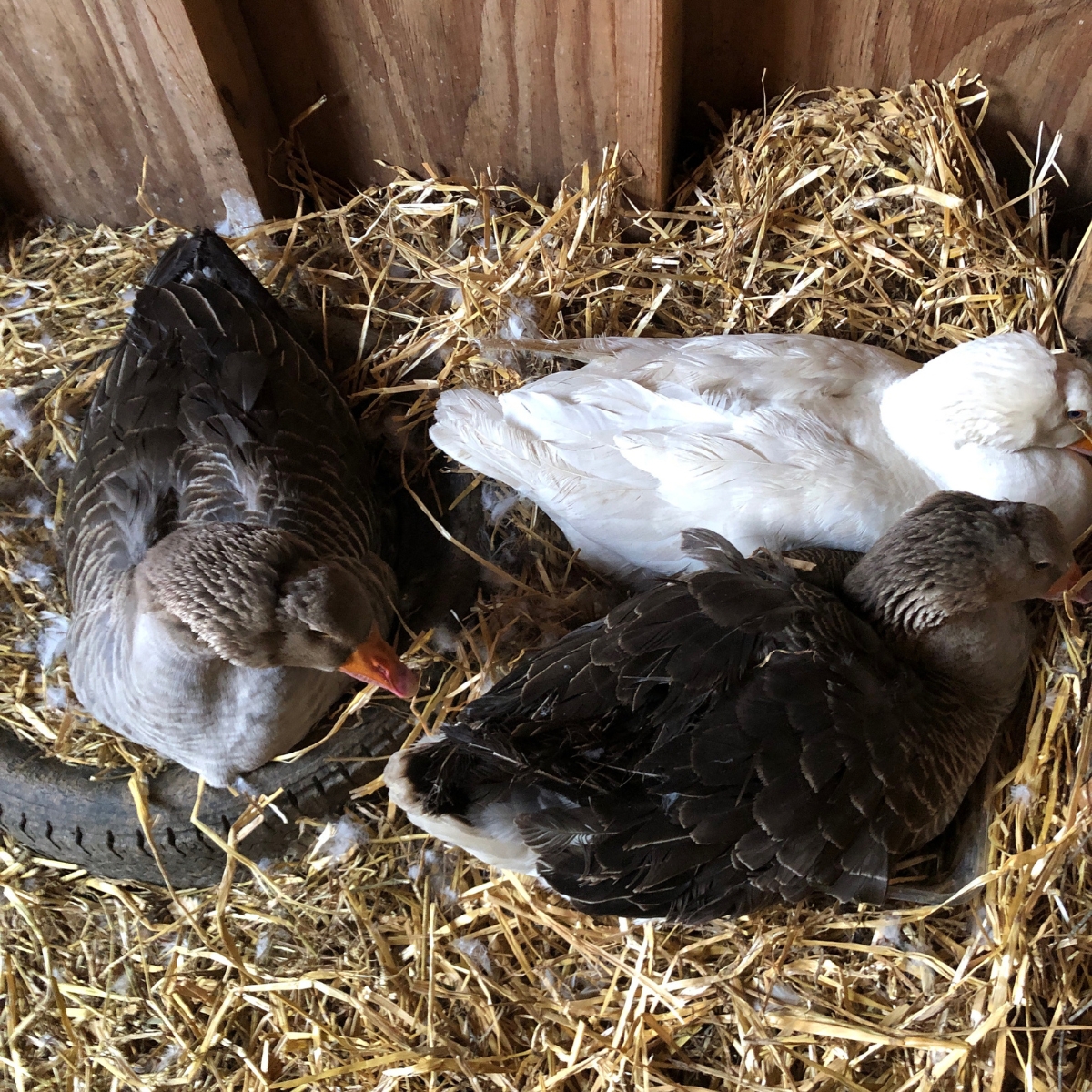
Nest Sharing
What if Mama Goose has a sister that wants to share nesting duty? This is a pretty common scenario actually! It's not unusual for two or even three female geese to choose the same nest, even when there are multiple nesting spots available.
Often, this can work well. The girls can take turns on the nest, while allowing longer breaks than if just one were sitting. I find that the best plan is to simply keep a close eye, and know your own birds well.
For example, I have one goose who loves to co-sit a nest (she'll never sit alone though!). However, during the night she has an awful habit of re-arranging the eggs in the nest, and tends to push one or two over the edge, leaving it there until morning, by which time it's gone cold.
I've found the best way of managing this desire to co-sit s to let her join her milder mannered sister on the nest during the days, then pick her up and dump her out with the rest of the goose flock every night. The eggs stay safe, and she doesn't do her rearranging trick during daytime hours. She's odd, but we all have our quirks around here, and it just...works.
Knowing your girls, trusting YOUR instincts, and tweaking your care to meet the idiosyncrasies of your own flock, goes a long way to setting your mother geese up for success.
Let Dad Help
Many folks assume that keeping the male geese away from the nest, and from young goslings, is necessary. Interestingly, letting a broody goose's mate join her for all or part of the 28-day brooding process can work very well. Especially if he's been around the nest continually, a gander may even take on some of the parenting duties once the goslings hatch, freeing mama up to pack on some ounces, after eating minimally and losing substantial weight during four weeks of nest sitting.
Should you candle the eggs under a broody goose?
Yes. My feeling is that if you can candle the eggs under mama without causing her too much distress, it's a good idea to candle the eggs after she's been sitting on them for about two weeks.
By then, any that are going to develop will have easily visible embryos inside. Any that clearly are not developing can be removed from the nest, eliminating the risk of "stinkers" that could rot and explode inside the nest.
While some geese absolutely will not tolerate human interference around their nest, even if they're usually quite tame, I feel it's a really good practice to keep your broody geese used to your presence daily, if you can.
This makes it so much easier to candle the eggs, and check on the goslings once they hatch.
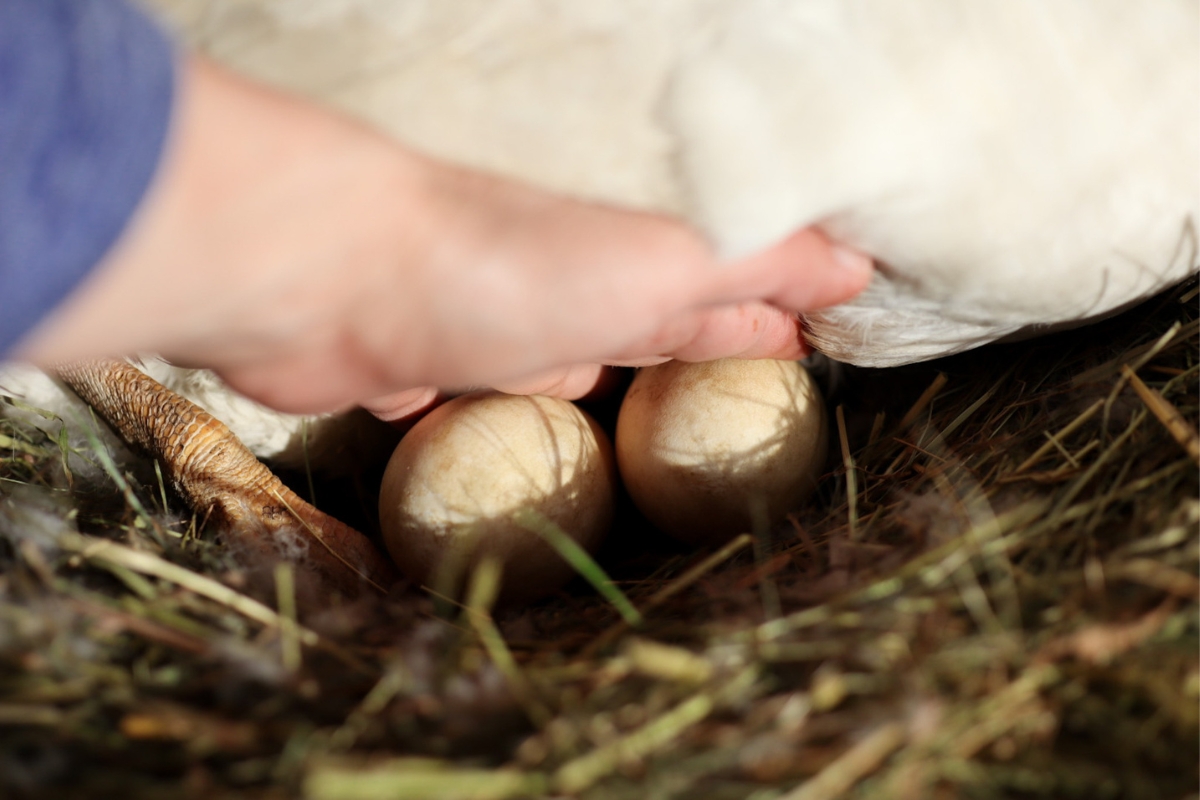
A great way to do this is to offer a special treat, like romaine lettuce, every day at the same time. The mama goose I have sitting in the barn right now, knows that she can expect an early afternoon treat every day, and that part of our routine is for me to reach my hand under her, and check her eggs. Because she's used to it, she stays calm, and doesn't anxiously jostle the eggs when she sees me approaching.
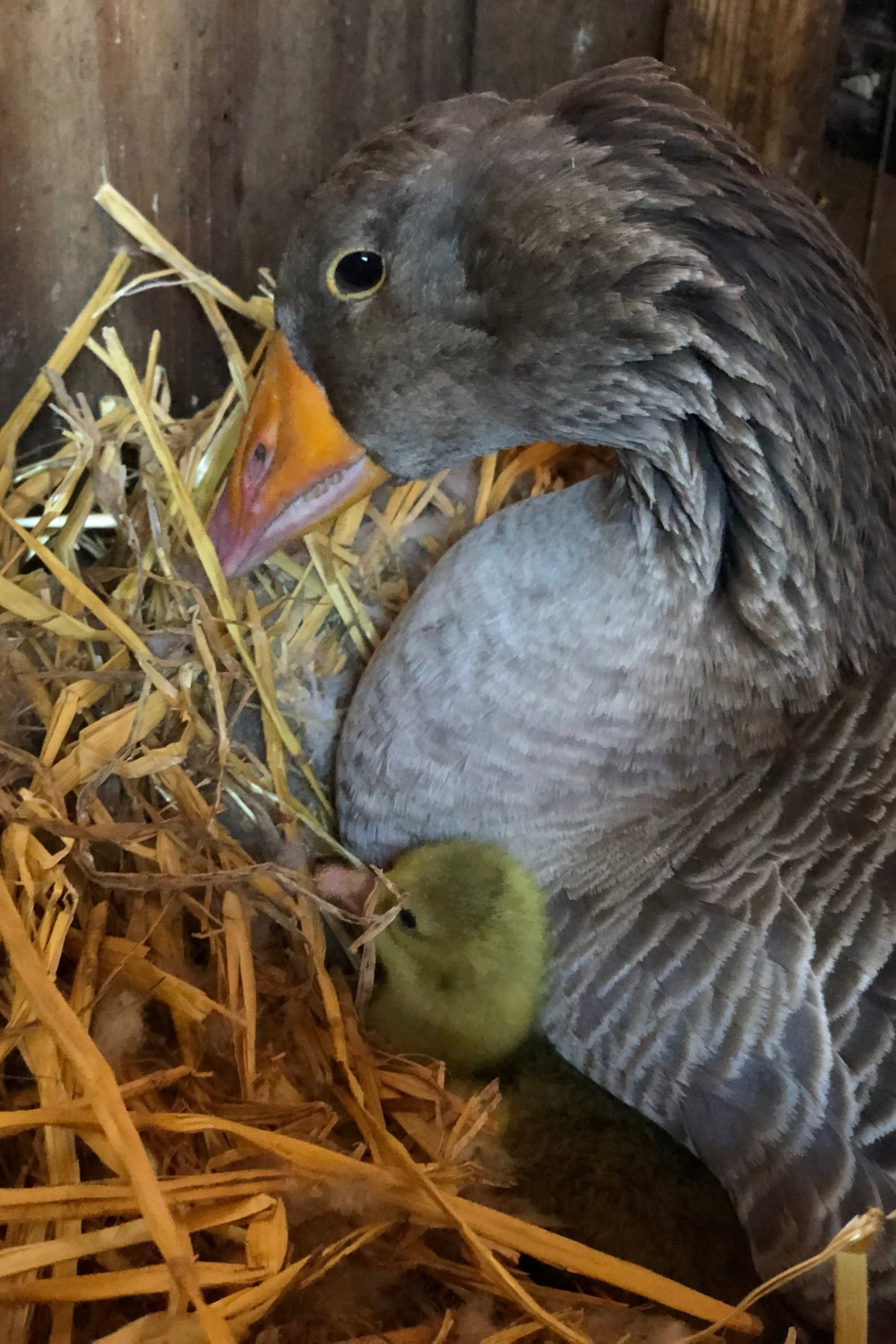
Hatch day and beyond
When it's time for the goslings to hatch, you'll probably notice that mama doesn't leave the nest for a day or two, even to poop or eat. That's ok, she can tell when her goslings are starting to hatch, and she'll be ok if she goes a day or two without leaving the nest. You may also hear a change in her voice as she starts "talking" to her babies.
It's a good idea to keep things as calm as possible around the nest, until you know that all the eggs have hatched, and you see mama interacting confidently with her babies.
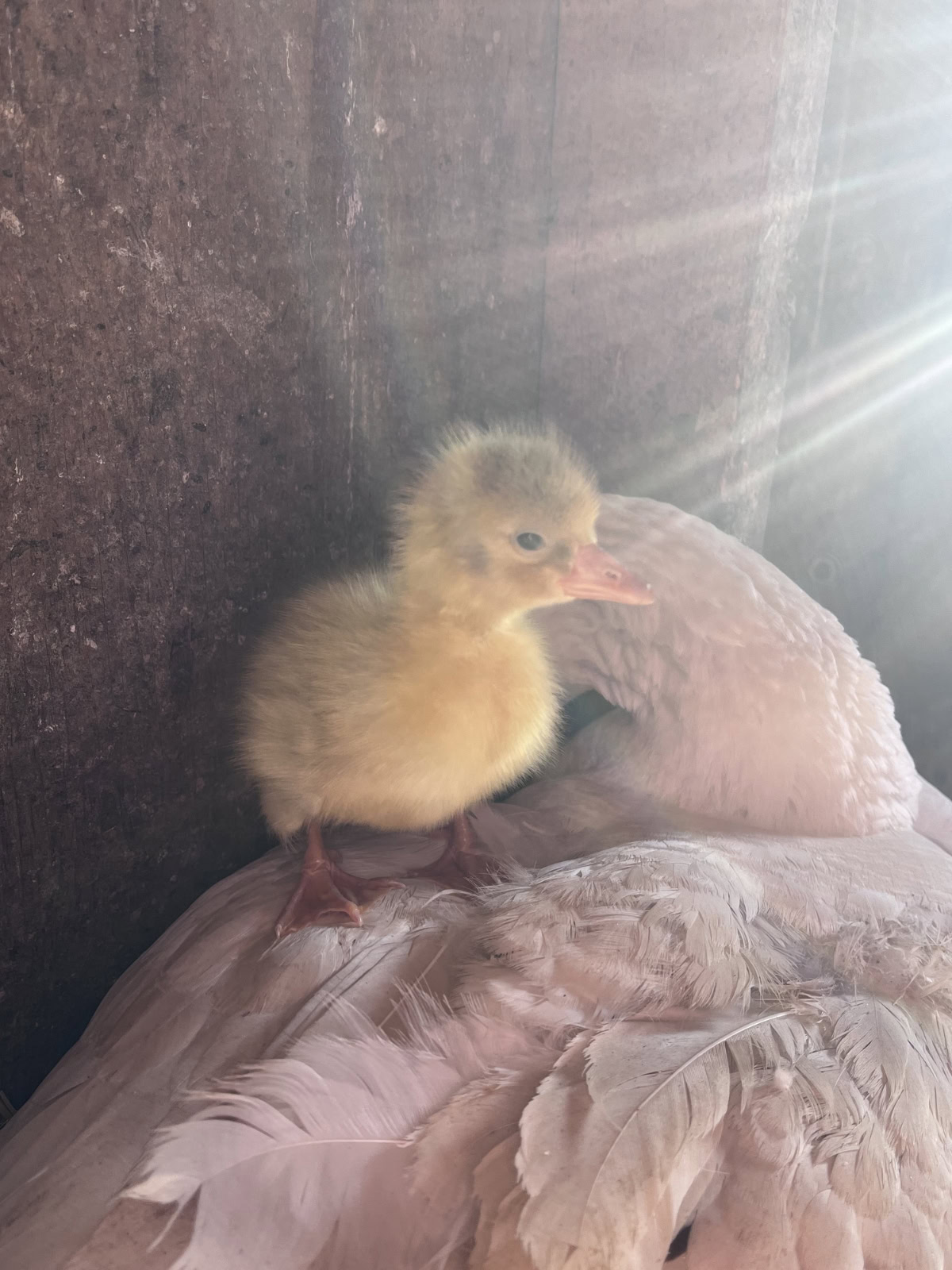
Once you see her leaving the nest with them, go ahead and set up dishes with starter crumble and water, for mama and babies to share. It's ok for mom to eat the starter crumble just like her babies, that extra protein will do her good after losing so much weight during the four weeks of sitting on eggs.
You'll want to put a rock or some stones or marbles into the water bowl, so that it's deep enough for mama to get her bill in there, but not so deep and open that the babies can get wet. Goslings are more prone to getting chilled than most other poultry babies, so taking care to keep them from getting drenched is especially important.
I'll be sharing more tips in the next article, for navigating the early stages of raising goslings with a broody goose. I hope this has helped you feel confident setting your mama geese up for success as they sit on eggs, and hatch out those goslings. If you have any lingering questions, please don't hesitate to ask in the comments!
Cheering you on from Maine,
Anna

Anna Chesley
Anna Chesley is a freelance writer living a homestead lifestyle, with a special love for family travel, old books, vintage skills, and seaside living. In addition to founding Salt In My Coffee, she runs the website, New England Family Life, as well as The 1800's Housewife, a website devoted to re-creating authentic 1800's recipes.
Comments
No Comments