

Start seeds indoors
Here in Maine, the first week of March is a great time for starting tomato, pepper, broccoli, cauliflower, and Brussels sprouts seedlings. Onion and shallot seedlings take a bit longer, so usually I've started those back in early February, or even in January if I'm feeling eager.
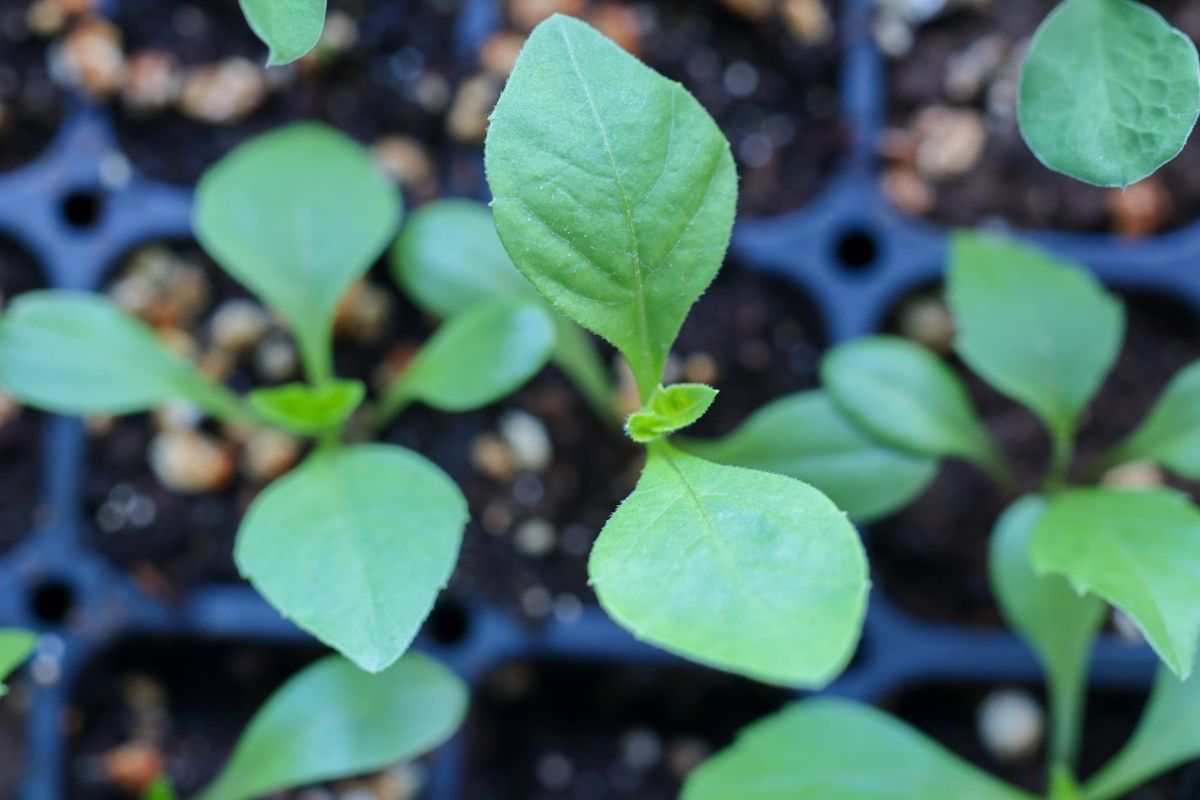
March is also a great time for starting many different types of cut flowers, and slower-growing herbs, like lavender and horehound.
Order all canning supplies
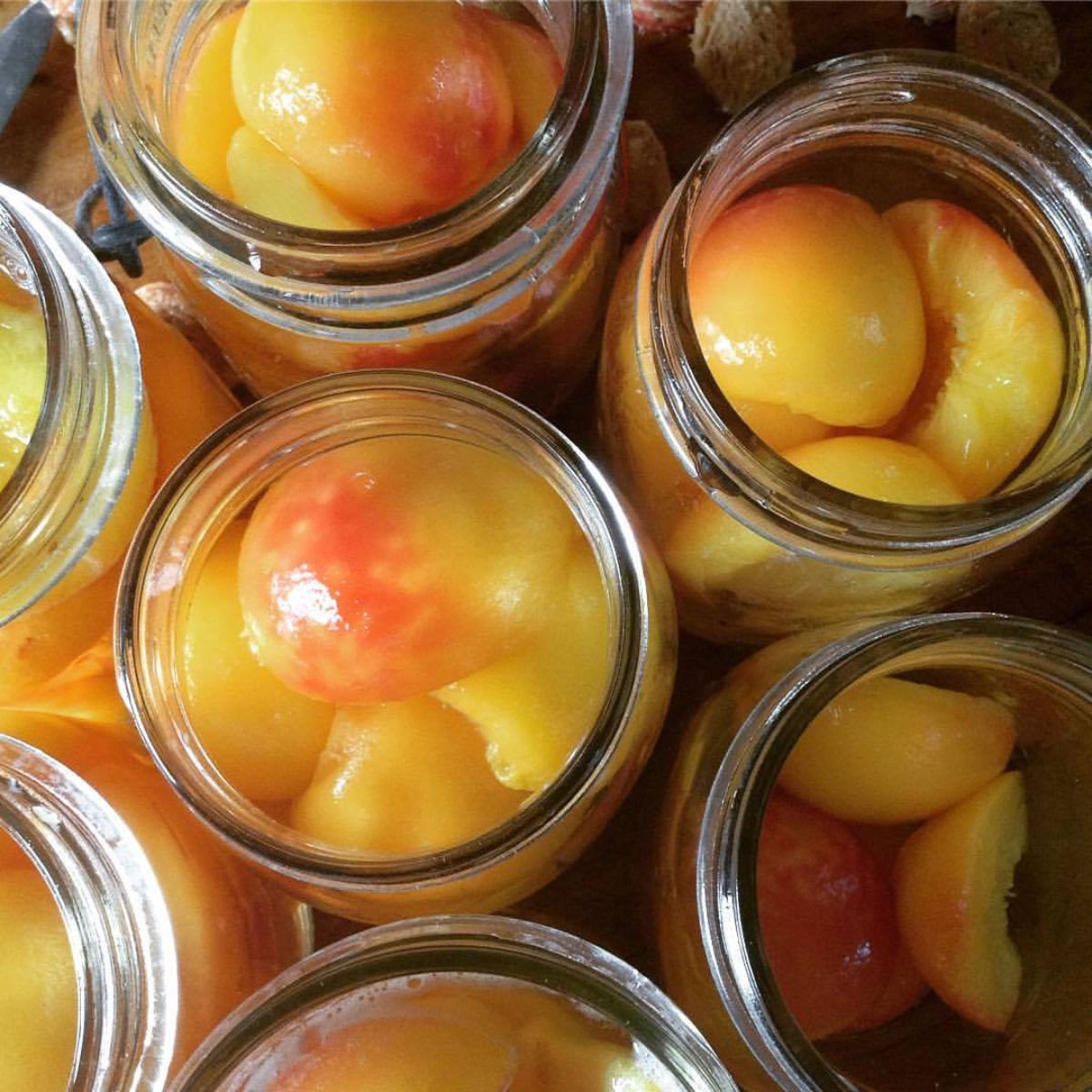
This is going to seem like jumping the gun, but there's a reason I order my canning supplies this early. Do you remember back in 2020 when everyone was suddenly baking sourdough and planting victory gardens? Well, that summer there was a huge shortage on canning supplies, as everyone was wanting to put up the harvests from their new gardens.
It was hard to get canning jars in the most useful sizes, and prices went absolutely through the roof. It was a good lesson in supply and demand market volatility. Since that year, I've made a point of being ahead of the summer canning supplies demand, stocking up on jars and lids while the prices are at their cheapest.
I predict that with so many people losing jobs, and turning to subsistence gardening, that this year is going to be a do-over of the 2020 canning supply shortage by the way. Seed suppliers and chick hatcheries are like a canary in the coal mine when it comes to homesteading interest each year, and I'm hearing that both hatcheries and seed suppliers are experiencing extremely high demand right now, compared to most years.
Hatch chicks (and/or ducklings, goslings, turkey poults)
When I was hatching and selling chicks and ducklings as a way to keep the bills paid, I used to start my incubators in January. These days, most of my income is made from writing, rather than day-old chicks, and any hatching I do is generally to replenish our own flocks.
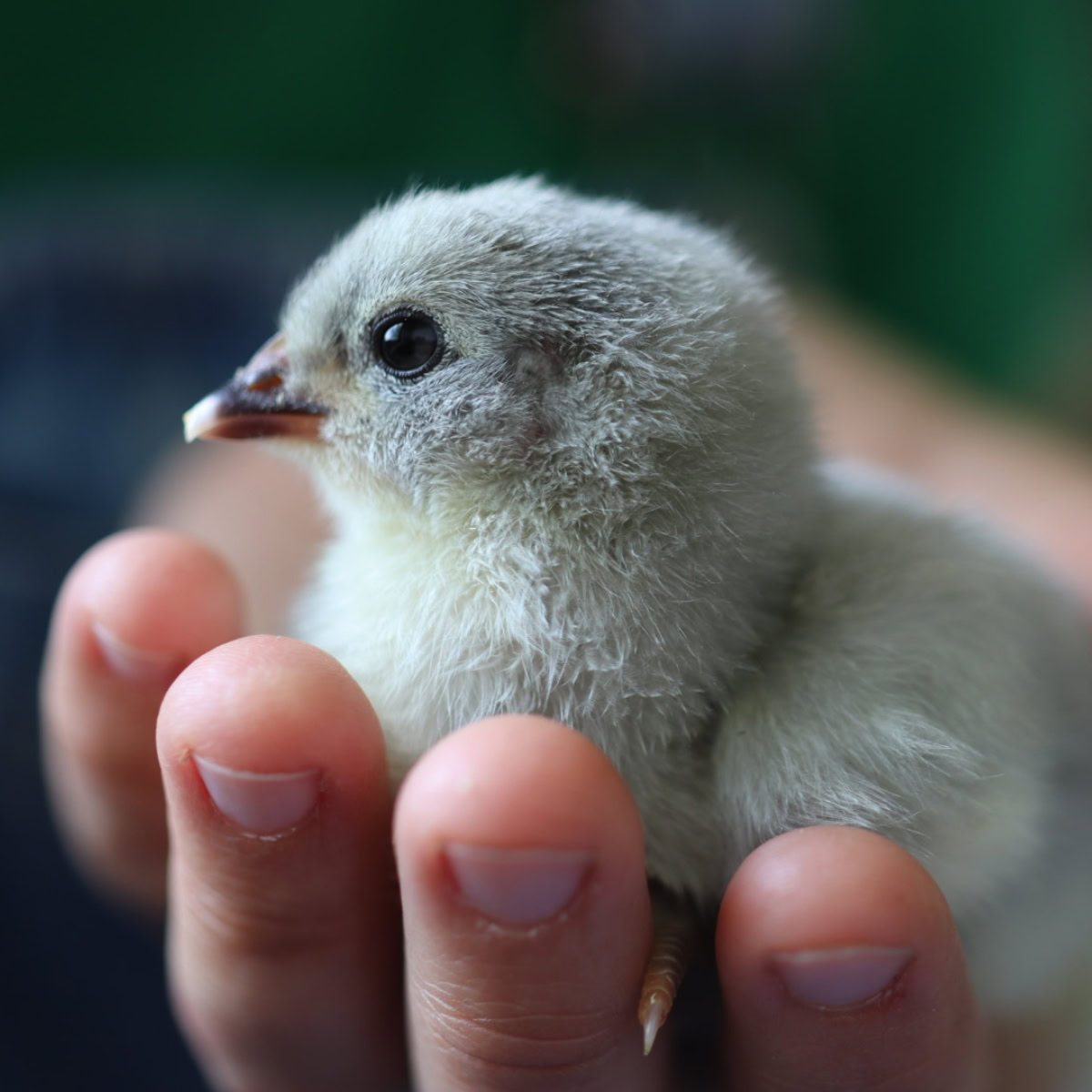
Having brooder tubs full of noisy, adorable fluff balls is a distraction I try to keep to a minimum, so I don't start my incubators until March now. That way, the weather's warming up by the time the young poultry need brooding out. And often, by the time they hatch, I've got broody mother hens who are happy to raise them for me.
Take scion wood and grapevine cuttings
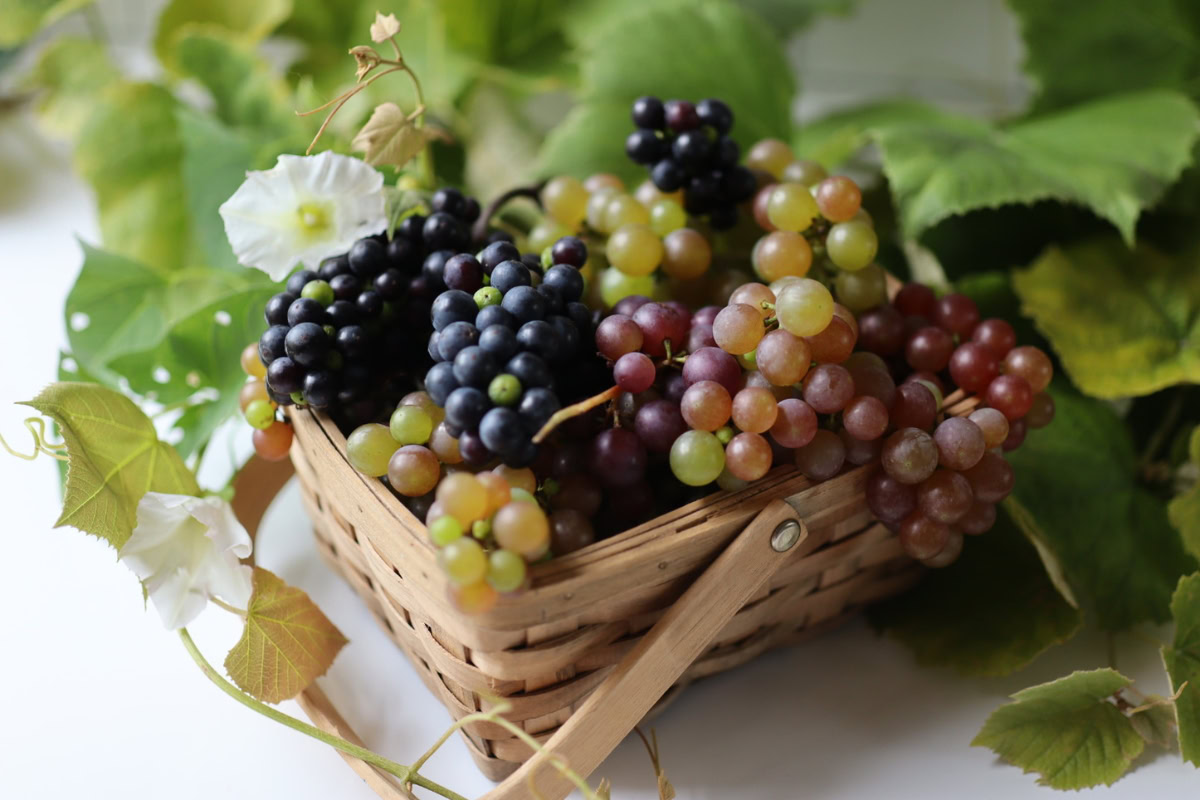
While fruit trees and grapevines are still dormant, it's a great time to take cuttings for propagation.
Propagating grape vines from cuttings is about as easy as it gets, and this article will walk you through it.
For the fruit trees, you're not going to be just rooting those cuttings, like with the grapevines. You'll need rootstock to graft your scion wood cuttings onto. Grafting is fun and easy once you get the hang of it.
March is also a popular time for local seed and scionwood swaps, so if you're looking for new varieties at little to no cost, this is a great time to keep your eyes open for events like this. They're a great way to build connections with your local homesteading community as well!
If I'm placing an order for new types of grapevines or scionwood from an online or mail-order supplier, I usually do that in late January, but it's generally not too late even in March (though some popular or rare varieties may be sold out.)
You can find my favorite suppliers here.
Prune fruit trees
Ah, pruning! Kind of like hanging laundry on a breezy, sunny, summer day, there's NOTHING that feels quite like pruning a fruit tree on one of those first warm days in March.
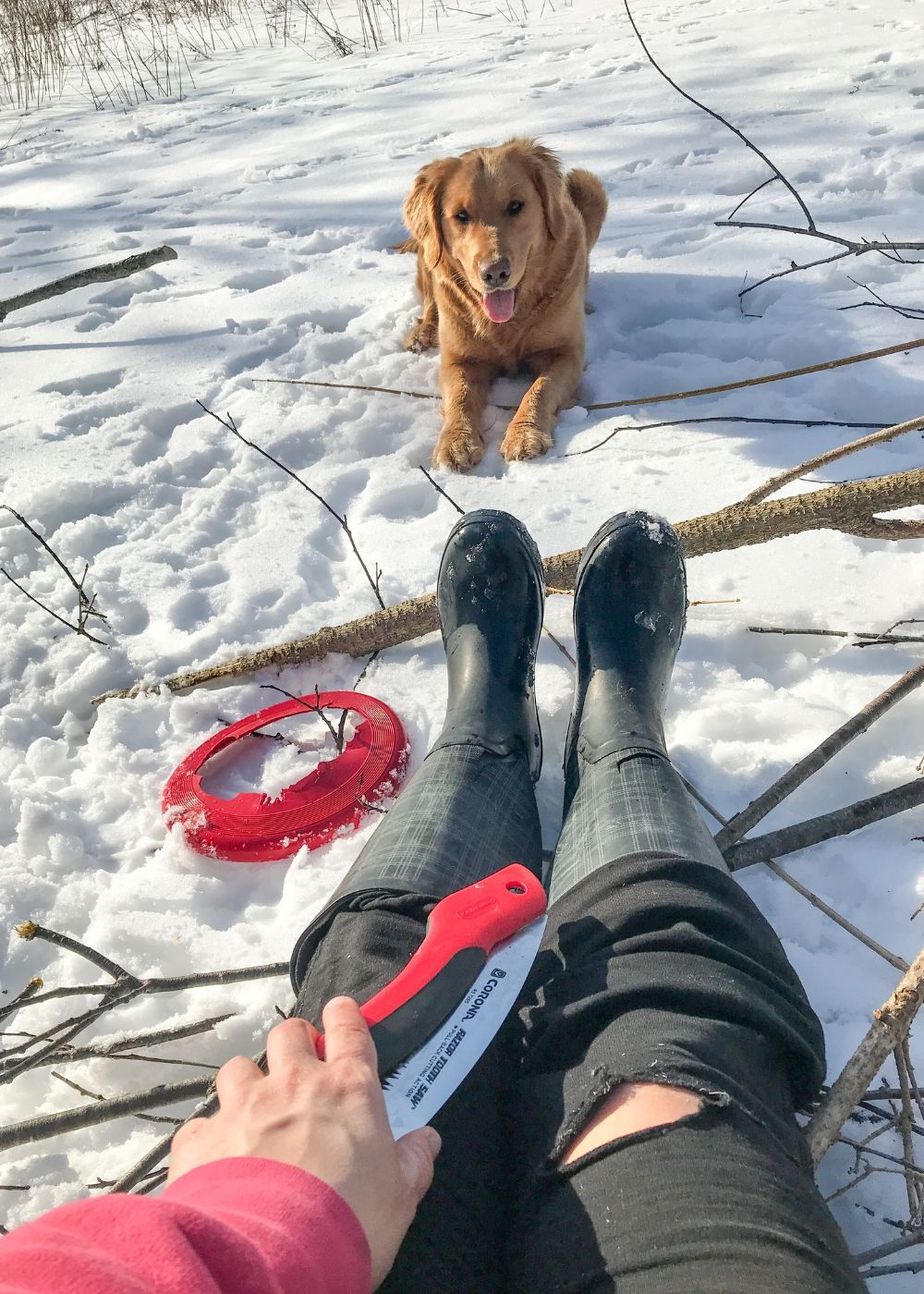
There's still a deep pack of snow on the ground to crunch under your boots, and lift you a little closer to the branches where you're making your cuts. The trees are still dormant, and your saw and pruning shears are sharp. Pruning in early spring is one of those homestead chores I just love.
Most guides will tell you that early April is the "right" time to prune, and honestly that's true. It's still possible that some extreme cold weather will roll in and cause some additional die-back that you'd want to prune out. However, pruning isn't a one-and-done deal. Keep those pruners sharp, and prune out damage and dead wood as you see it through the year.
The reason I prune on the early side, in March, is that being a single working homestead mom, I am SO DANG BUSY. April brings many homestead tasks that really can't be done earlier in the season, and pruning is one task that can be done early without harm.
The more I can get off my plate before the real rush of spring begins, the more successful my planting season is.
Finalize garden plans
Roughing out the "big picture" for each year's garden plan is generally something I do in January. I usually don't finalize the exact layout of my garden plans until March though, after I've ordered all of my seeds.
I know that usually I'm going to find some new varieties I'd like to try, during the seed-ordering process, and find that it works out all to firm up my garden diagrams once I'm done buying seeds.
Sell hatching eggs
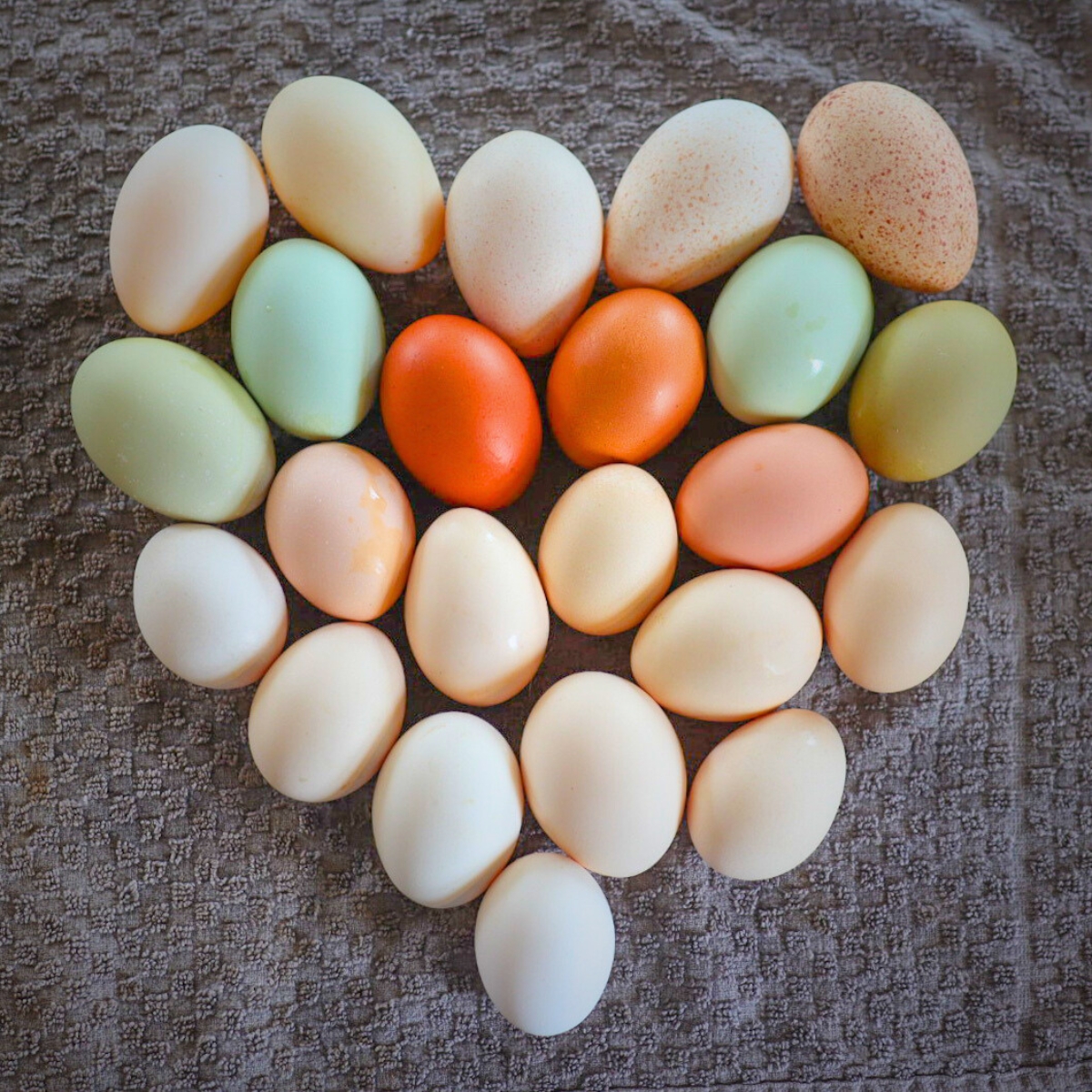
There's generally a high demand for fertile hatching eggs from late January, through early May. Selling eggs for hatching, at $25 or $30 a dozen, adds up a lot more quickly than selling them for eating at $5. It takes a little more effort with advertising and egg handling (you're not just putting them out in a roadside cooler with a sign), but it's definitely worth it for the difference in profit margin.
Taking inventory of food storage
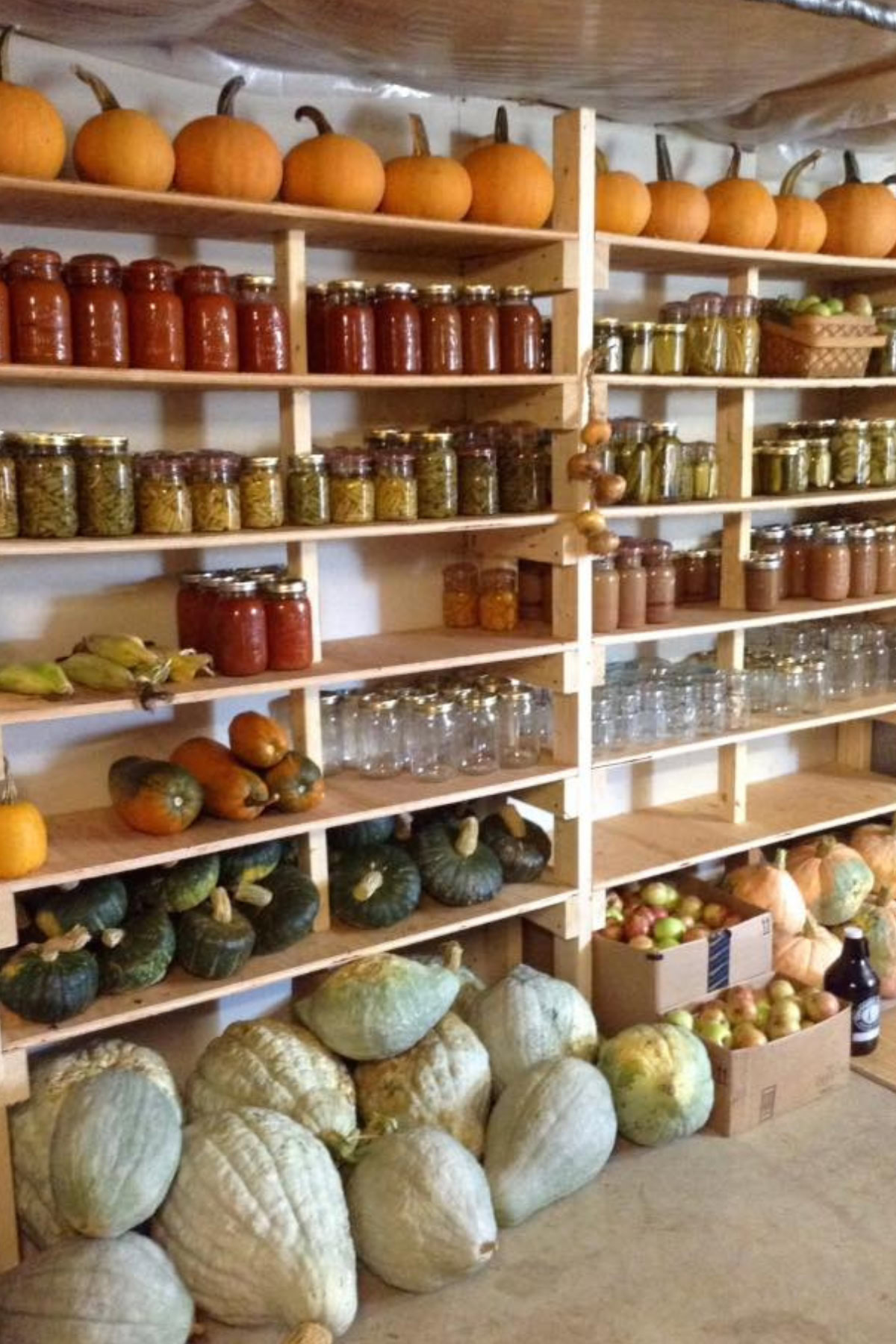
It's a good idea to put eyes on your food storage shelves at least once a month, just to check for any spoilage. In March, I find it's a good time to go over what remains of the harvest put up from last year, and really take inventory of what my family has eaten over the course of the winter.
It can be eye-opening, and help to firm up those garden plans and food preservation goals for the coming summer. Some things I noticed when doing this last week were that we've gone through far less applesauce than I'd expected. Now that my kids aren't toddlers anymore, we're not going through 30-40 jars of it a year, like we did for few years there.
That jam shelf that I thought I went overboard stocking last summer though? Wow, we've made a good dent in it! Now that the kids are in school, I pack a good old PB&J in their lunchbox every Friday, and every now and again (usually during a growth spurt when the eating is non-stop!) they'll ask for a peanut butter and jam sandwich to hold them over til dinner.
It felt like overkill making all that homemade jam last year, but you can be I'll be doing it again this year. Based on my own pantry inventory, my own food preservation goals this year look like: less applesauce, and fewer jars of pickles, more tomato sauce and green beans, and just as much jam as last year.
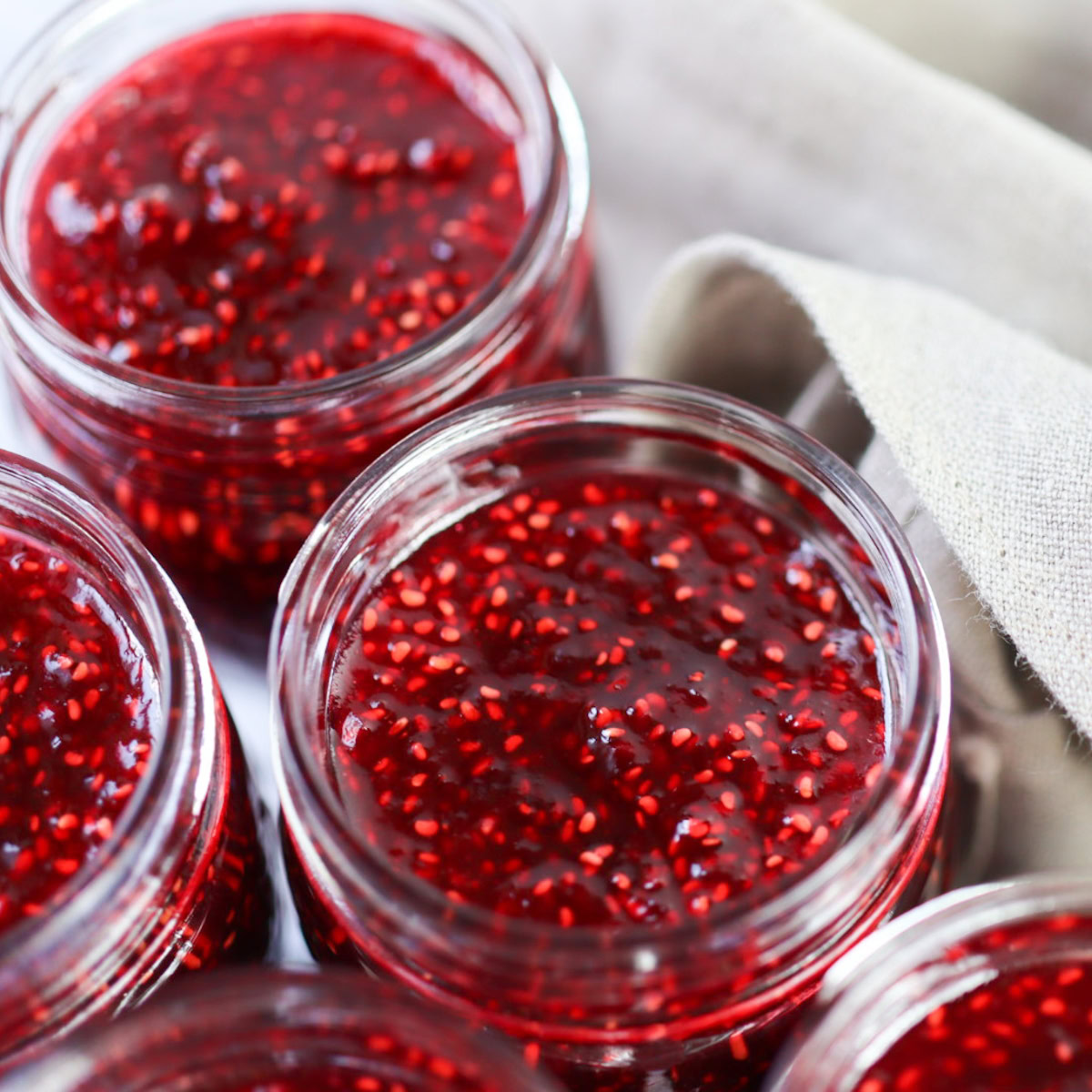
This is my PB&J loving kiddo's favorite jam we made last year, by the way!
In addition to the regular daily tasks of homesteading, those are the tasks I almost always do in March each year. I hope you've found this helpful, and would love to hear if there are tasks you do each year at this time, that aren't on this list. Let us know in the comments!
Cheering you on from Maine...
~ Anna

Anna Chesley
Anna Chesley is a freelance writer living a homestead lifestyle, with a special love for family travel, old books, vintage skills, and seaside living. In addition to founding Salt In My Coffee, she runs the website, New England Family Life, as well as The 1800's Housewife, a website devoted to re-creating authentic 1800's recipes.
Christine says
I love pruning, too! 🙂 And I especially loved the picture of your shelves, overflowing with produce from last year‘s harvest! 🙂
Anna Chesley says
Oh thank you for the kind words! Do you know, that picture is actually from almost a decade ago! That was the first harvest after moving to this homestead. Those shelves are far more filled right now--I was a canning machine last summer. 😅 But I'll never forget how good it felt putting up that first harvest!