

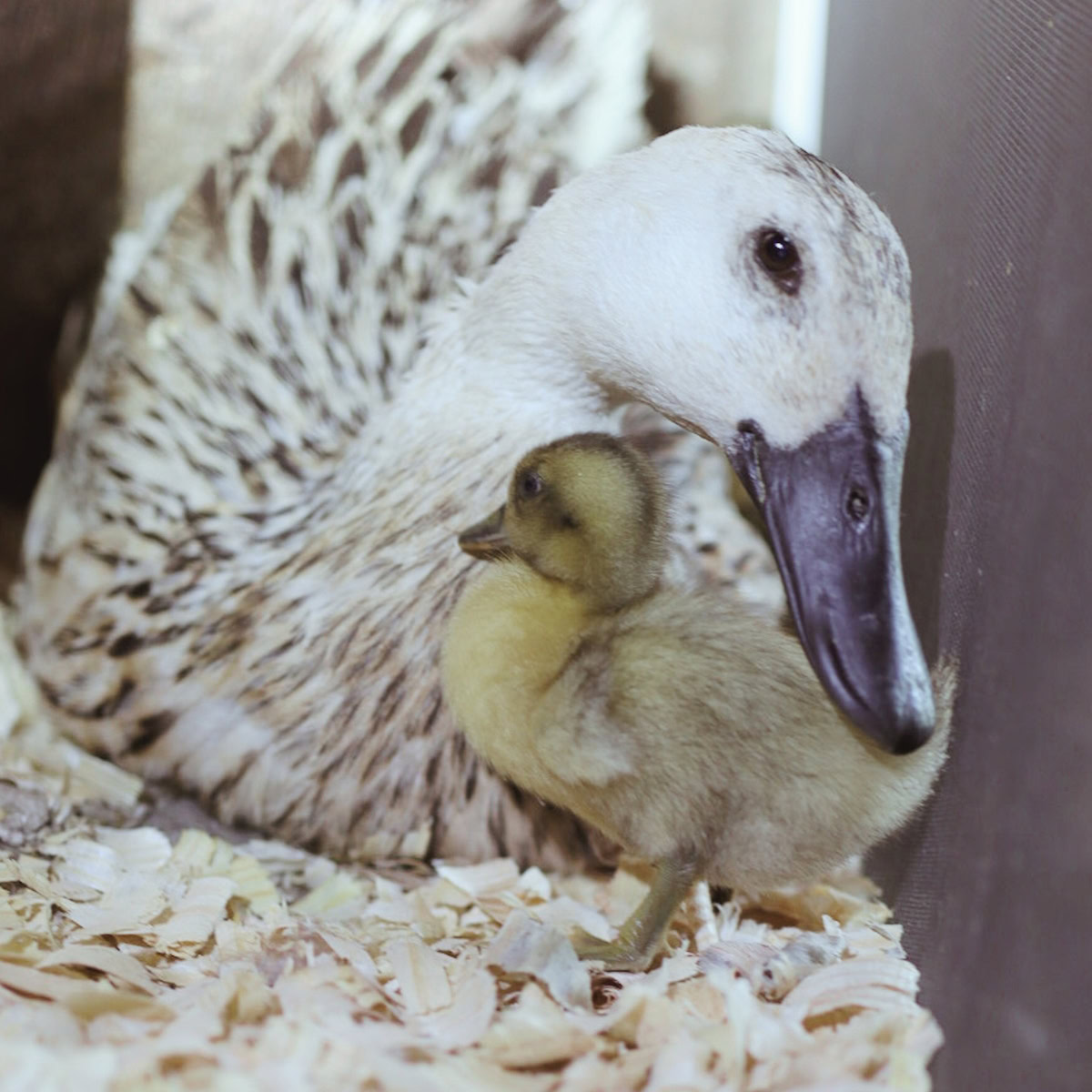
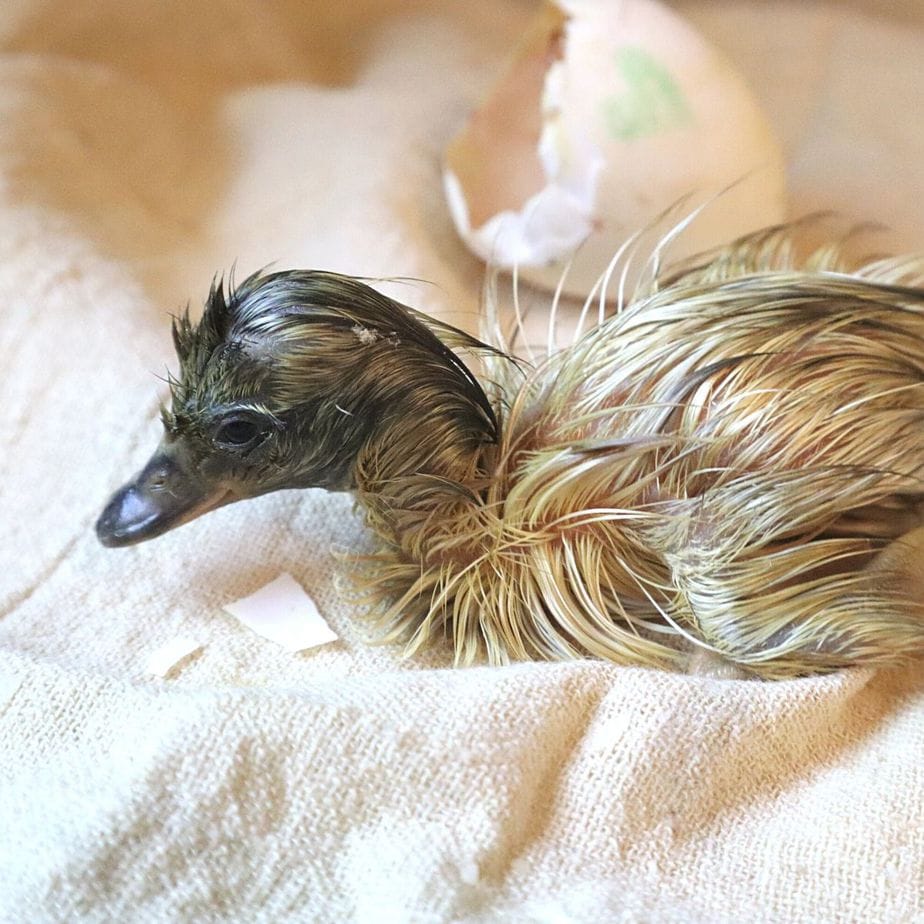
Four and half weeks ago, when I was placing duck eggs in my incubator, I'd fully expected to brood out the ducklings myself, since I didn't have any broody hens or ducks at the time.
A week ago, though, my sweet girl Betsy went broody. Since I don't need any more ducklings, besides the 13 we just hatched, I haven't given her any eggs to sit on. But even with removing the eggs her sisters laid in her nest every day, she faithfully was sitting without leaving the nest.
The timing couldn't have been better, for getting her to do the work of raising out these babies for me. As a bonus, Betsy didn't need to spend an entire four weeks sitting in a hot barn, to come away with an adorable clutch of babies. I think it was a win-win.
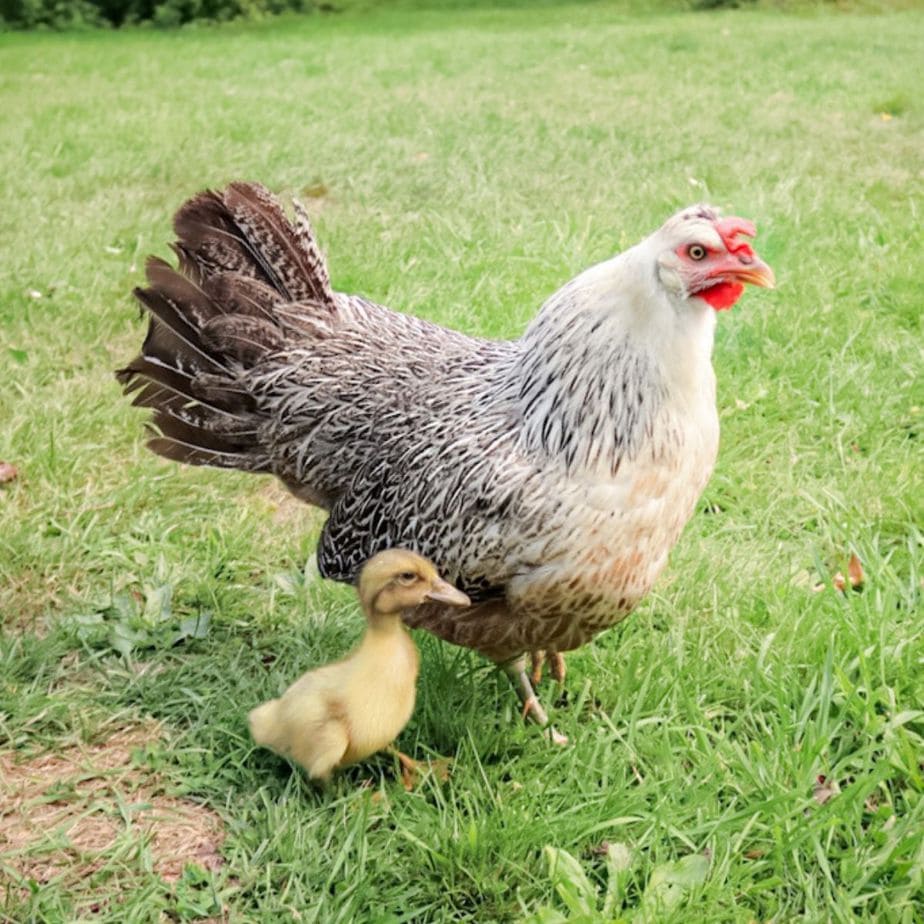
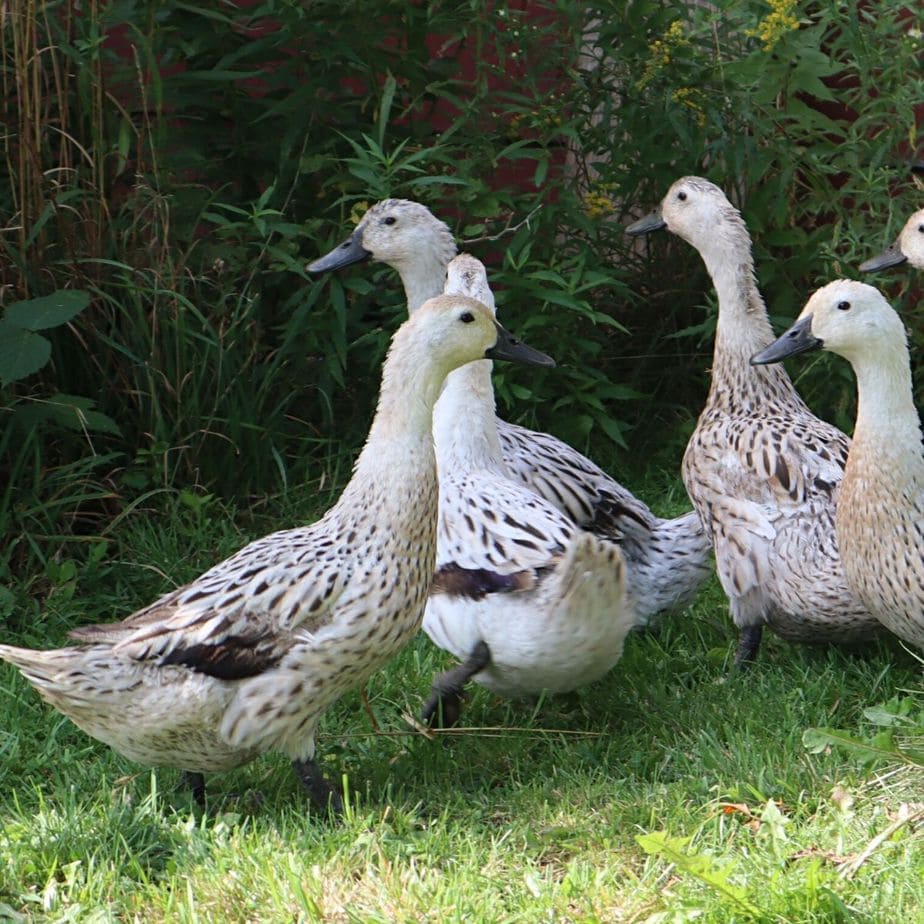
I've written previously about raising ducklings using a broody hen, but thought this was a good opportunity to share a few tips about fostering incubator-hatched ducklings with a broody duck. Here a few tips I've learned from doing this with my Welsh Harlequins.
How long she's been broody can matter
Duck eggs usually take right about 28 days to hatch (unless they're Muscovy, in which case it's 28 days.) In my experience, ducks can have sometimes have a strong internal drive to sit for at least a few weeks, before being ready to accept ducklings. It's like some of them have a little kitchen timer that needs to go off, before they're ready to be in "mom mode".
This isn't always the case though, and with Betsy it certainly wasn't. She'd only been glued to the nest for 4 or 5 days before I decided to try giving her some of the day-old ducklings from this hatch, and she immediately did wonderfully with them. I've had chicken hens that so live for raising babies, that they don't even need to be broody to accept and raise a clutch. I've yet to witness that strong a mothering drive in a non-broody duck, but that doesn't mean it doesn't happen.
What time of day to give her the babies
So many people on chicken and duck keeping forums, and even some homestead bloggers, parrot the advice about giving day-old poultry to broody hens at night, when they're sleeping.
I personally do not recommend this.
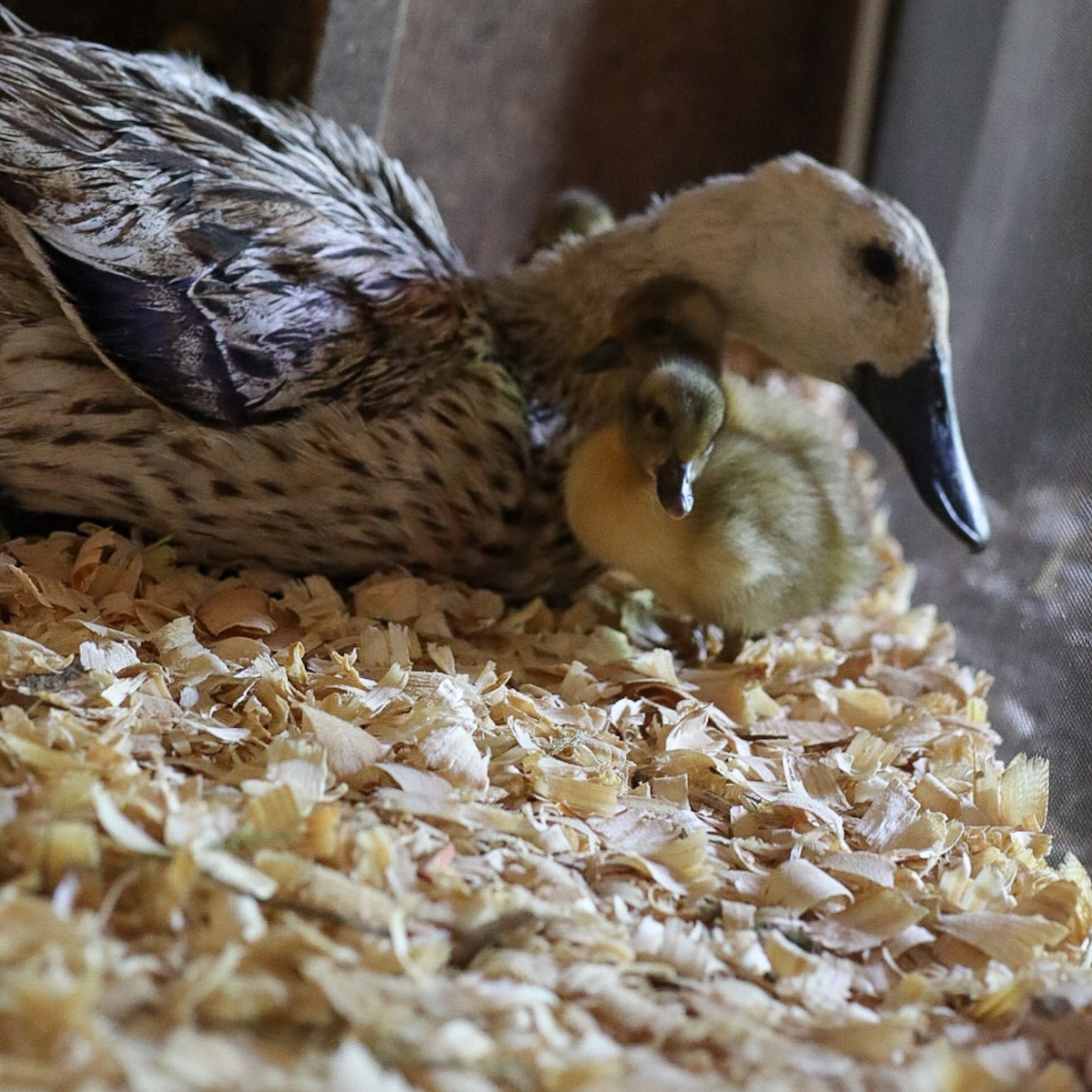
Whenever I foster babies with a broody hen, whether chicken or duck, I do this first thing in the morning after I've finished the morning chores. This goes for ducklings, turkey poults, chicks, or goslings.
I want all day to pop in and check on mom and babies, and see how she's doing with them, before shutting up the barn and not having eyes on them all night. None of us want to wake up to tragedy.
No matter how experienced your mama, no matter how many broods she's raised out, this can always be the one that she somehow decides she doesn't want to accept. You want to figure that out during the daytime, when you can still make a change.
How old should the babies be?
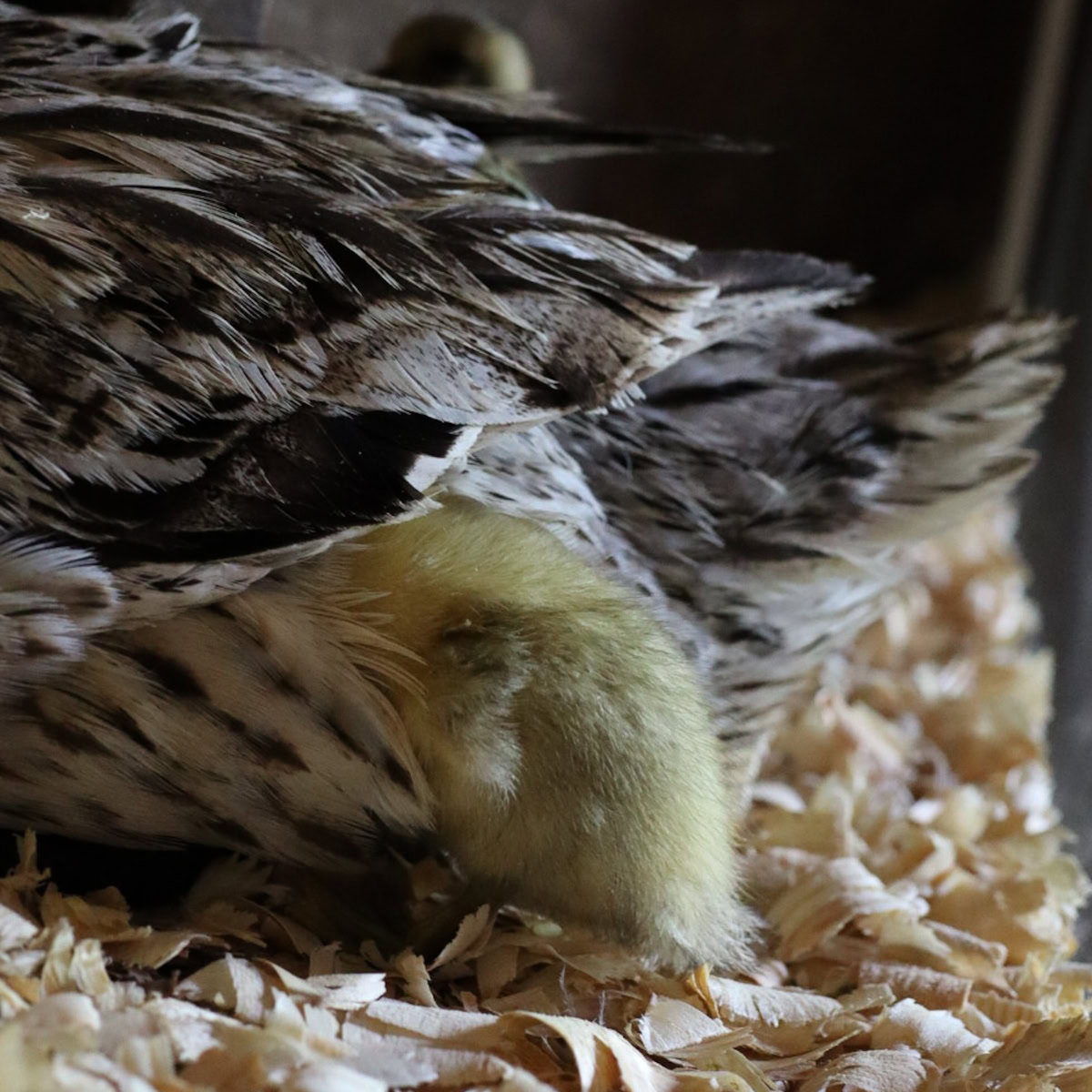
In my experience, it's always easiest to get babies bonded with mom as young as possible. If you've hatched them yourself in an incubator, I'd take them right out to mom, rather than moving them to a brooder first. (Do have a backup brooder ready though, in case the fostering doesn't work out.)
If you've bought the ducklings as day-old babies, go ahead and get them to mama as soon as you can.
Remove any eggs when giving her the ducklings
In my experience, it works most successfully to gently remove any eggs mom might be trying to sit on, at the same time when you're giving her the ducklings. I like to use one hand to grab egg, while smoothly sliding a baby or two in from the other side. Get those babes right under her wings if you can. If she has lots of eggs, or you're giving her several babies, you might need to do this a few times, and that's ok.
Some folks like to leave a few eggs under mama along with the ducklings, but in my experience this can lead to mama have a loyalty to the eggs, rather than the babies. My observation has been that having eggs still in the nest works negatively against her bonding with the ducklings.
Watching and waiting
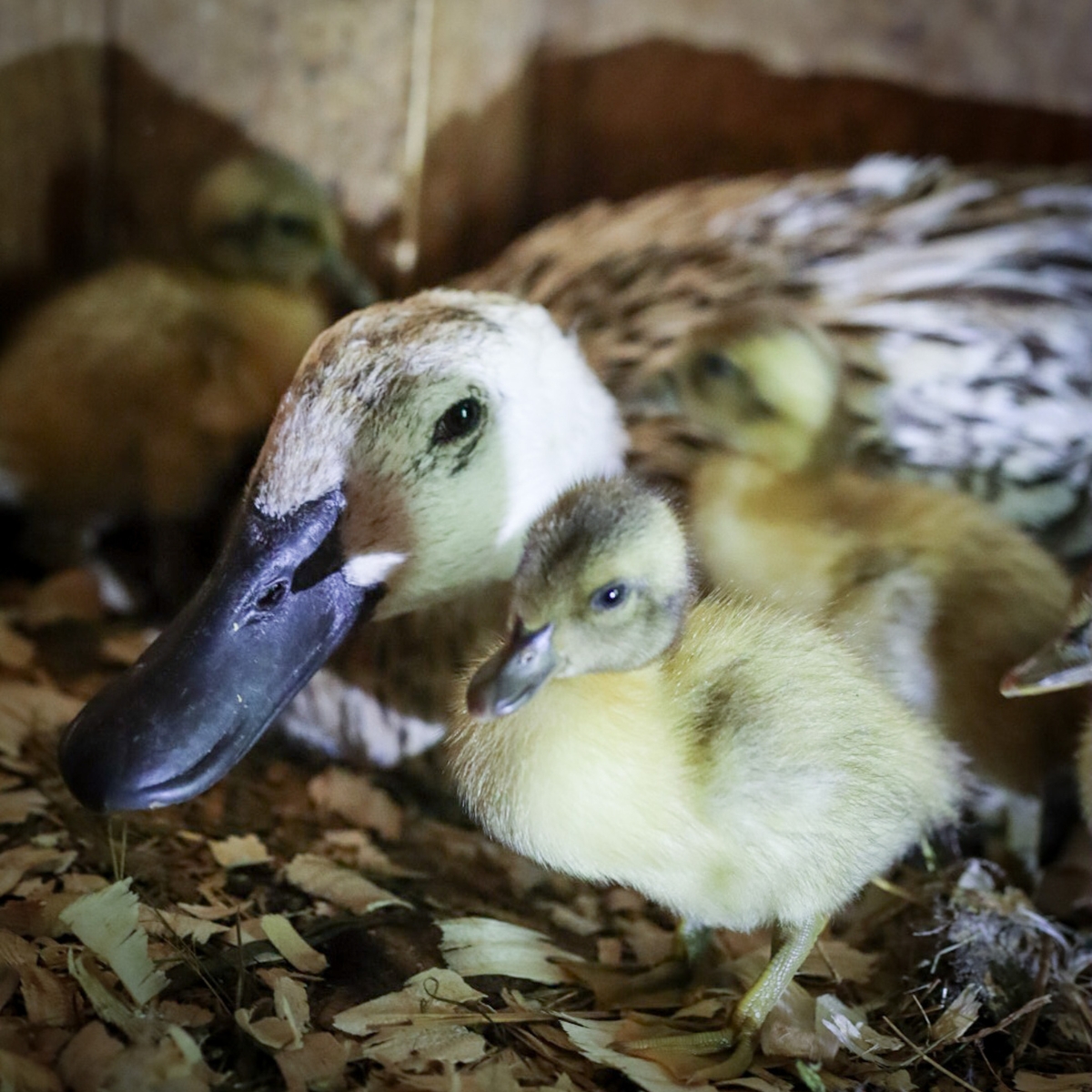
When I first give a mom some babies to foster, I generally peek in on her about once every 10 minutes for the first hour, then every hour for the rest of that first day.
I'll also check on her quickly with a flashlight, when I'm shutting the barn up. It's good to make this quick, so you don't disturb her, but knowing that everyone is safely tucked under mamas wings for the night is a good practice.
Food and Water
If your ducklings have just hatched, they're not going to need water or food right away. Mom will need water though, especially if the weather's hot.
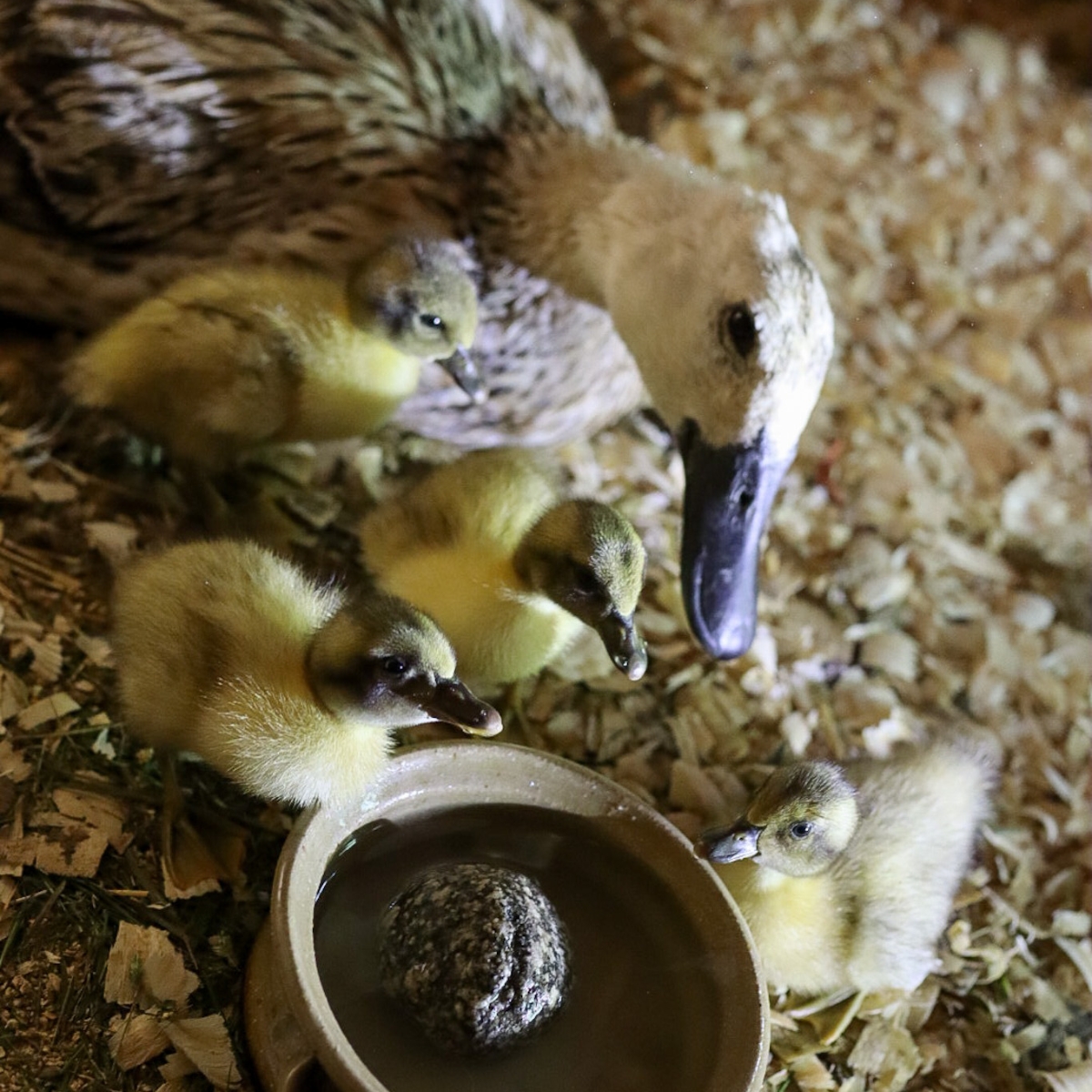
I generally wait until after the babies have been with mom for a couple of hours, before bringing a shallow bowl of starter crumble for them to share, and a baby-proofed bowl of water.
A regular chick waterer isn't a great solution in this situation, because you really want mom and babies to be able to eat and drink from the same dishes. Using a wide and fairly shallow bowl, with a couple of rocks in it, so that babies can't fit their whole bodies into it, works very well.
Should you set up a barrier around the nest?
Unless it troubles mom, a temporary barrier around the nest to help keep babies from wandering, and other poultry from getting too close, is often helpful. I usually do this, unless I'm working with a very social mom who does not do well feeling closed off from her sisters.
Betsy is a quiet duck, and really values privacy when she's sitting on a nest, so I did put up a temporary screened barrier around her nest, after feeling confident that she'd accepted the babies. This also can help make it easy on mom in the first few days of duckling-rearing, so that they don't wander too far from the nest. My best advice here is to know your own flock, and trust your girls. If they don't want to be ensconced away from all the action, it really might not be necessary.
The biggest things you'll want to be sure of, if you don't set up some kind of barrier, are:
1. That there's no deep source of water nearby that the babies could scramble into and drown.
2. That none of the other birds in the flock are being aggressive toward the babies, and that there's no danger to them from other poultry that share the barn.
What to feed mom and babies
Either a non-medicated starter crumble, or a higher-protein grower crumble are good choices. Mom is going to benefit from that extra protein just as much as the babies will, after losing weight while sitting on her nest.
I use an organic 19% protein crumble that I've a good results with. It doesn't have the extra calcium of a layer mash, but isn't as high protein as an "all flock" starter crumble. I start all my ducklings off as potential permanent members of the breeding flock, and 22% or higher is just not optimal for raising ducks with ideal body type, and maximum long-term laying potential.
When to let mom and babies out on pasture
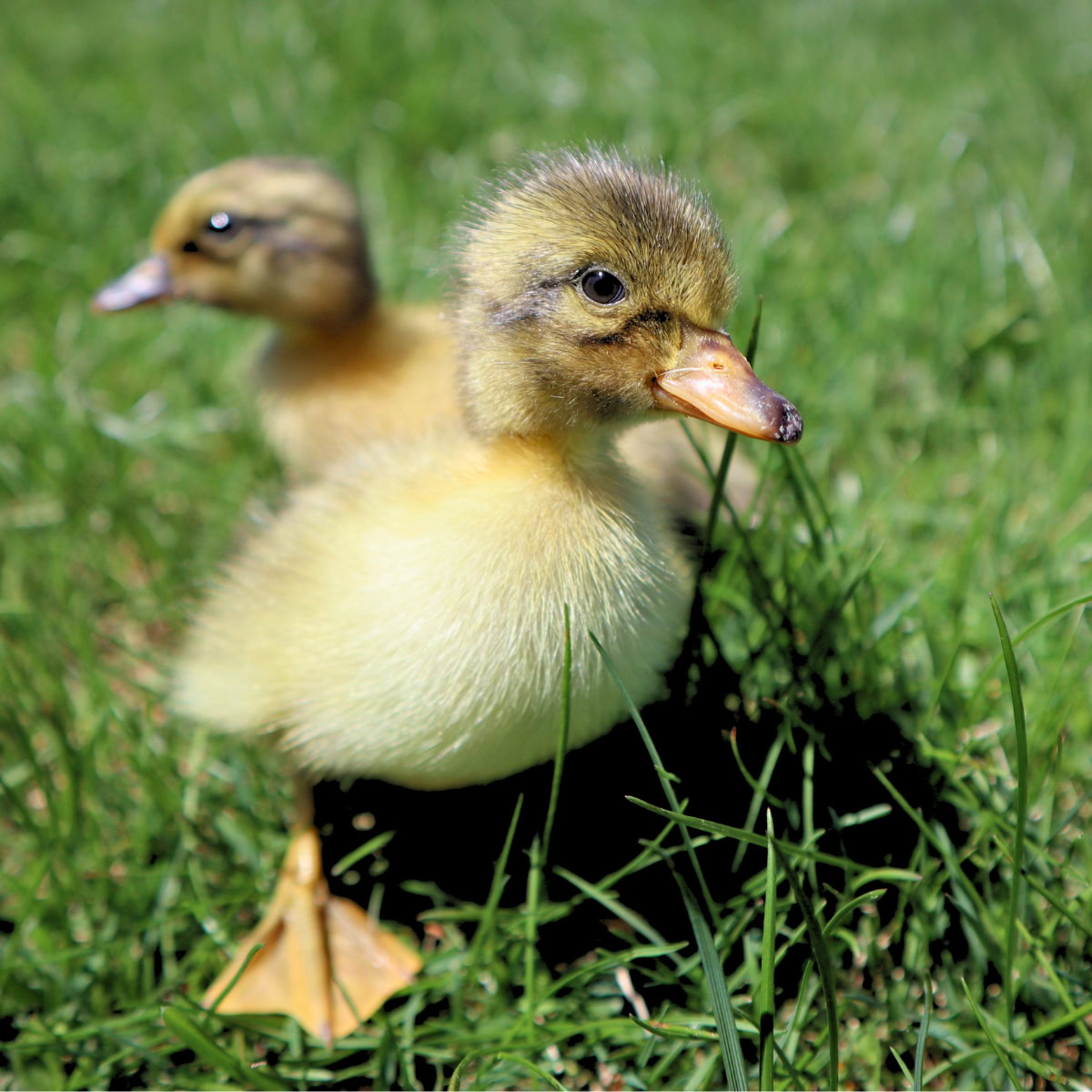
Letting mom be your guide is usually the best bet, when it comes to turning mom and babies loose to graze out on gras with the flock. In my experience, she'll let you know when she's ready, and she won't let you mistake what she means!
When mama's ready to rejoin the flock, she's ready.
It's a good idea to make sure you're choosing a day you'll be home, when you first let them out. Even if you're just keeping an occasional eye on the window, and an ear out for potential drama, it's helpful to be nearby just in case anything happens. Usually mom will be attentive to the babies, and usually she'll make sure the rest of the flock keeps a respectful distance from her babies.
If things don't seem to be going well, though, you can always put them back in and try again in several days. If you have an aggressive drake, or another mama who attacks the babies as a threat to her own, you might find you need to create a longer term living space for mama and her babies, until they're big enough to not easily be injured by other members of the flock.
What if mom is sharing a nest with other ducks?
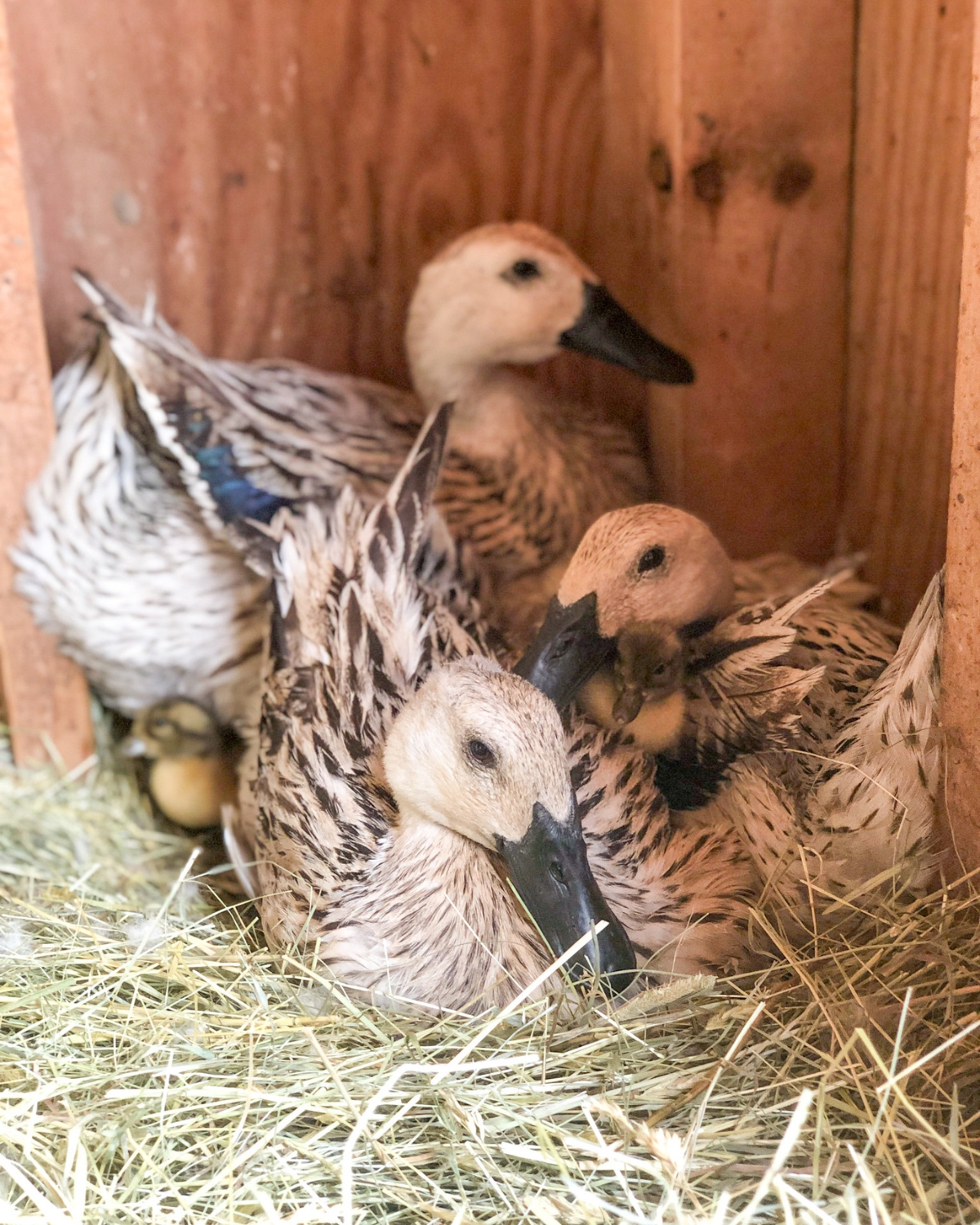
I often have girls who try to sit on the same nest. With my turkeys and hens, and even sometimes the geese, it's often worked out delightfully for them to raise out a clutch of babies together, sharing parenting duties seamlessly.
With my ducks, I've not found this to be the case. That doesn't mean it won't work with yours though. I once tried to give some ducklings to three ducks that had been sitting on a nest together for weeks. They were so happy to have babies!
Quickly though, I found that it just wasn't working well. You know that old safety adage, "If everyone's watching the baby, NO ONE is watching the baby"?
This was exactly that.
Once the initial delight started to wear off, they just didn't do a great job of being attentive mothers. I ended up relieving two of them from mothering duties, and set up the remaining mother with the babies in her own little "maternity ward". It was a good solution, and she was a much better mother after not sharing parenting duties with her sisters.
Again, this is just my experience with ducks. In the future, I don't think I'd try to foster duckling under multiple moms again, but would work to get one mom sitting on one nest in a good location, and then foster the ducklings to her.
Well, this has been a bit of a long-winded article, but I do hope you've found it helpful. Again, as I always urge--know your flock, and trust your instincts. These are tips I've learned from my years of raising ducklings with my own flock, but every duck is unique.
Knowing your own girls, knowing your flock, and paying close attention to what they're telling you, is really the most important key to success, in my opinion.
If you have any questions, please feel free to leave them in the comments, and know that I'm cheering you on from Maine!
~ Anna
Other articles about raising ducks:
- How Long Do Ducklings Take To Hatch?
- 10 Great Ways to Use Extra Eggs
- Raising Extra Drakes for Meat
- How Long Does it Take For Duck Eggs to Hatch?
- Get Started Hatching Poultry For Profit
- How to Raise Friendly Ducks
- Can Muscovies breed with other ducks?
- Raising Ducklings with a Broody Hen
- Why are my ducks NOT laying eggs?
- Should you help a duckling hatch?
- Sturdy perennials for duck runs
- Help! My Duckling Isn't Growing.
- Ducklings' First Day Outside
- Duckling Hatching Video: Meet Zoe & Wash
- How Many Drakes Can I Have In My Flock?
- 11 Types of Poultry for Homesteads and Farms


Anna Chesley
Anna Chesley is a freelance writer living a homestead lifestyle, with a special love for family travel, old books, vintage skills, and seaside living. In addition to founding Salt In My Coffee, she runs the website, New England Family Life, as well as The 1800's Housewife, a website devoted to re-creating authentic 1800's recipes.


Comments
No Comments